March 30, 2017

Waterproof Jackets for Spring Cycling @ BikeParts.com
There is no such thing as “bad biking weather”, just ask those happy folks cycling around the Front Range every day of the year. Most cyclist have experienced a sprinkle, shower, or torrential downpour at some point during their cycling career—but with the right gear and attitude, riding in wet weather can be acceptable, and maybe even fun. Here’s what you need.
Rain jacket – Cycling rain jackets are optimized to be fully waterproof and breathable while allowing for a range of movement, and they often have subtle (or unsubtle) reflective accents. The thing to be mindful of when choosing one is the hood. If you ride in a helmet, is the hood big enough to fit over it? If not, opt for a head cap. A cycling cap, worn underneath your helmet, will help keep the rain from running into your eyes while you ride, and help shield your face from the rain.
Shoe covers or waterproof shoes – Shoe covers, also known as booties, cover the exterior of your shoes and protect from wet, cold, and wind. There are several options: some that cover just the toes and others that encompass the entire foot. Sometimes, even shoe covers aren’t enough protection. Waterproof cycling shoes and boots can be a very smart investment, especially if you’re determined to ride in the rain frequently.
Gloves – Perched out on your handlebars your hands face the brunt of the weather. As your hands become numb from the constant rain, their temperature quickly cools, and before too long you can have some very frozen fingers to deal with. Frozen fingers aren’t much good at changing gear, braking or clinging to the handlebars, and they’re extremely uncomfortable. Opt for full finger / windproof gloves and waterproof gloves.
Lights – Even if it’s daylight out, you should ride with lights—for the same reason cars turn their lights on in the rain. The sky is darker, rain can obscure your outline, and drivers are already distracted. Using lights will make you more visible, and help you stay safe.
Maintenance – Experiencing mechanical difficulties in wet conditions is not fun! A well maintained bike is a fun bike to ride – even in the rain. While bike maintenance can be a chore, having the right set of bike components and bicycle tools can make all the difference. Good reminders for riding in wet conditions is to wipe down and inspect the frame. Then, follow that up by applying lube your chain and pivot points.
Finally, adjust your attitude! Learn to love riding in the rain. Stop by Peak Cycles Bicycle Shop or visit us at BikeParts.com to select the cycling apparel that matches your riding style and wet riding needs.
 Leave a Comment » |
  Peak Cycles Bicycle Shop | Tagged: bicycle tools, bike maintenance, bike parts, booties, chain lube, cycling apparel, cycling cap, cycling rain gear, full finger gloves, lights, rain jackets, wet riding gear |
  Permalink
 Posted by staffwriter8
March 16, 2017

Team Rider at BikeParts.com / Peak Cycles Bicycle Shop
Planning and preparing for race season is part of a cyclist’s yearly ritual. Looking forward to focused training and racing is what keeps most coming back season after season. However, a common misconception is that all of an athlete’s time needs to be devoted to the bike when race preparation begins. Not true. Having the right pre season mindset can be a game changer for performance and satisfaction.
Set Goals – Everyone has different goals. For some, races are just about getting harder efforts in and saddle time. For others, it’s making the podium. For most cyclist, it’s about achieving personal bests. The most important aspect of having a goals it that it can help reduce pre race anxiety and also help you better evaluate your performance post race. Identify what you want to accomplish with early season races – whether it be a targeted heart rate or power zone, a solid nutrition plan, or attacking certain areas on the race course.
Pre Race Bike Preparations – While you may have been training on your road bike or mountain bike, race conditions may require more from your bike. Before you head for the start line, you should conduct a bike maintenance and safety check. Know which bikes, bike parts, cycling accessories, and cycling apparel are appropriate for the trail or road route you will be racing. Remember, because it’s early season, the weather fluctuates, so consider variable weather conditions and the bike tools and bike parts you may require under different conditions. Preparation eliminates the frustration of experiencing a mechanical; so while bike maintenance may not always be fun, it’s worthwhile.
Establish Race Day Rituals – Most likely it’s been a while since your last race; so remembering what your routines and rituals that worked last season may be absent for this seasons first races. Designing and refining a pre-event routine is an important part of building a successful race season. Does having a checklist of race day activities help structure your preparation to the start line? Include items such as nutrition, hydration, clothes, gear, extra bike parts and basic bike tools. Consider having a timer count down so you don’t loose track of time. This way, you won’t forget anything as you prepare for your start. Use each early season race to build on race day rituals that have helped you in the past and also enhance your support for your next race.
Start Line Mental State – Your thoughts, emotions, and pre race behaviors are components of your mental state. With that in mind, take inventory of your mental state and align them with your goals. It’s easy to compare your training and fitness to others. This is where having your race plan and goals specific to this event comes in handy.
Mid Race Mental Toughness – Generally at some point during the race, something is going to go wrong – or at least, not quite as ideal as expected. Either you suffer from a mechanical issue or your race day nutrition is off or you just feel the suffering from a hard effort. This is the time to dig deep and exercise mental toughness. As described in the post, Developing Mental Toughness: Are you Tough Enough?, “mental toughness is your ability to persevere in the face of challenges, to keep going even when things get hard, and to have an unrelenting commitment to your goals. When you develop your mental toughness, obstacles are only temporary and one bad performance doesn’t shake your belief in your ability.” Your “stick to it” attitude during early season races prepares you for the bigger challenges you will face later in the race year.
Post Race Evaluation – Evaluate your results based on your goals. What worked? What didn’t? What can you do next race to get a better result? Be objective and explore how your mental and physical training helped prepare you for this event.
A winning mindset isn’t a set it and forget it type of thing. Consistency and flexibility are crucial elements in the ongoing approach to your races as the season unfolds. Be consistent in your preparations yet build upon what you have learned to fire up the engine and get out there and race better with each race!
2 Comments | Peak Cycles Bicycle Shop | Tagged: bike maintenance, bike parts, bike tools, cycling accessories, cycling apparel, early season training, hydration, nutrition, race preparations | Permalink
Posted by staffwriter8
February 23, 2017
Power – we all want it! But how do we get it? Gaining power on the bike isn’t an overnight achievement but one that is obtained through hard work and discipline. In the past, power was somewhat of a subjective thing but today, with so many cycling training tools available, power is quantifiable. In fact, the main idea behind using cycling training tools is to dial in training to optimize performance as it relates to specific goals and objectives. How can using power help you to get fitter – faster- and stronger on the bike?
Why train with power? It’s all about “balancing how much work you do with your body’s response.” It’s the best way to measure work and intensity, as in, Power (watts) = Torque (how hard you pedal) x Cadence (how fast you pedal). “Doing too much work means injury and overtraining risk. Too little means you’re not getting the maximum benefits you want. When power is measured your training becomes that much more effective.” At Peak Cycles Bicycle Shop, we’ve found the benefits of training with power include:
•Establishing your baseline fitness
•Accurately measuring even the smallest fitness gains
•Quantifying intensity, duration and frequency – instead of guessing
•Prevention of overtraining
•Accurately measuring energy use for nutrition planning
•Proper pacing for time trials
Sounds great! And it is! But how do you know which power meter is best for you? With so many bike parts and cycling accessories available, choosing the ideal product for your training and fitness goals is important. Fortunately, the post What to Know Before Buying a Power Meter, offers a breakdown on available power meters. Now, you might be wondering about costs? In the recent past, training with power was outside of the price range for most cyclist. However, times have changed and power meters are much more affordable. Our most popular are Stages Power Meters beginning at $1000. Stages Power meter is the lightest, smallest, most technologically advanced unit available today. Another option is the Pioneer Power Meter offered at $2000 and is a bit more sophisticated. A third favorite is a company that’s been around for a while now – PowerTap Power Meter.
Finally, the next question – how to get started? Training with a power meter is one of the most effective way to get results. However, to get those results you need to know what those numbers mean and how to use the data to dial in your training. A great resource available via Training Peaks is a Free Ebook: How To Start Training With Power. The Ebook starts by covering the basics like determining your threshold and setting your zones. It also explains the metrics behind power, how to analyze your data, see long term trends and how to use the numbers to get faster.
Do you have questions on which power meter fits your fitness needs or budget? Stop by Peak Cycles Bicycle Shop in Golden, Colorado to dial in your specific needs. You can browse the variety of cycling apparel and bike parts we have in the store while getting all your power meter questions answered. We hope to see you soon!
3 Comments | Peak Cycles Bicycle Shop | Tagged: bike parts, cycling accessories, cycling apparel, cycling training tools, Pioneer Power Meter, power meter, PowerTap Power Meter, Stages Power Meters, training with power | Permalink
Posted by staffwriter8
February 2, 2017
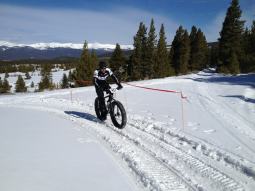 Less daylight, cold weather and difficulty planning winter workouts all contribute to less time on the bike. But, if you want to get fitter, faster, and more efficient on the bike, then guess what? You got to put your time in. So what do you do? Ride a fat bike! First time fat bike riders may question the bike parts and cycling apparel needed to ride comfortably, so below are our fat bike essentials to make fat biking work for you.
PEDALS & SHOES
Many new fat bike riders wonder if they should use clipless or flat pedals on a fat bike? Guess what? It’s your choice! The biggest problems people have making this decision is deciding how to best keep their feet warm. Having flat pedals will allow you to wear thick winter boots, which are more conducive to keeping your feet warm. However you can buy clipless boots that are designed to handle colder temperatures. Using a clipless pedal could prove annoying in snowy terrain if you have to dismount and remount frequently during your ride.
SMART CLOTHING CHOICES AND POGIES & GLOVES
Obviously, if you are going to be riding out in the cold, you’ll want to dress warm and dress appropriately. But what does that mean exactly? You have to think a little bit harder before and during your fat bike rides in the cold. Generally the most important tip for keeping warm is to layer, and to carry a pack to put your extra layers away. Some people prefer to wear ski goggles and a ski helmet, and lots of people wear winter boots. Poagies, insulated hand covers that slip over your handle bars, are also very useful for keeping your hands warm. Keeping your feet warm is key. Wearing boots, preferably water proof, with thick socks on flat pedals or clipless boots with multiple pairs of socks works.
FACE AND EYE PROTECTION
Obviously, cover your head! You can wear a buff or a cap and headgear. Buffs are really good for neck protection as well. Another option are balaclavas – especially so if you want to keep almost your entire face warm. Remember to wear appropriate eye protection too! The glare from the snow can be blinding. While not as stylish as some of the cycling eyewear we carry on BikeParts.com, you could consider wearing goggles to help protect our eyes and face in snowy conditions.
TIRES AND TIRE PRESSURE
Hmmmm, decisions here – What kind of tires should I use? How wide? What pressure do I run? Tube vs. Tubeless? Here’s what we suggest. You have to match tire pressure with conditions. Softer snow conditions: 6psi. Harder conditions: 8-10psi. (much lower than the normal bike). Fat-bike tires are typically marked as 26 x 4.0 though most are really more like 26 x 3.7 or 3.8. The actual size of the mounted tire will vary depending on the rim width used for the wheel. Many riders prefer tubeless because they reduce over a point of rotation weight and they provide better traction.
A FAT BIKE
You have to have a fat bike to ride one! Finding the fat bike that works for you will depend on the type of riding that you do and, more importantly, your budget. At Peak Cycles Bicycle Shop, we are all big fans of fat bike riding. Stop by to buy a fat bike or demo one. And if you want even more fat bike ideas, or need for cycling apparel, bike parts, and cycling accessories, stop in the shop for that too! We’ve got all the gear and cycling accessories for you riding needs!
Get in on the fat bike action! Take your cycling to another level of fun and sign up for one of the upcoming fat bike races. Check out our 2017 Colorado Fat Bike Racing Calendar. Stop by the shop for bike parts, cycling apparel, and get all your fat bike questions answered!
Leave a Comment » | Peak Cycles Bicycle Shop | Tagged: 2017 Colorado Fat Bike Racing Calendar., balaclavas, bike parts, cycling accessories, cycling apparel, fat bike, fat bike tires, PEDALS & SHOES, poagies | Permalink
Posted by staffwriter8
January 26, 2017
 Out with the old – in with the new. That’s pretty much the motto of the New Year. Many cyclists, both competitive and recreational, commit to New Year cycling resolutions; but, it’s right about now, late January, when those resolutions begin to fade. Whether is is general fatigue, lack of time, seasonal illness or just plain boredom, many find the resolutions of the New Year in the rear view mirror. Is there a way to make resolution stick? At Peak Cycles Bicycle Shop, we think so! Following are the 4 components to making your resolutions stick.
#1 ENJOYABLE: Plain and simple. If you enjoy what you are doing, you’ll do more of it. So, make winter riding more fun. Get the right clothing, winterize your bike, and get going! Check out the post, 21 Ways to Have More Fun on Your Bike, for more fun ideas including singing, testing new bike parts, experimenting with new cycling apps, and opt for new cycling accessories.
#2 CONSISTENT: Consistency in training helps you physical body prepare for the physical stresses of the upcoming season. According to the post, Nine Golden Rules for Training, consistency is key. That means consistently training but also, consistently racing builds fitness too. Consistency in racing builds all kinds of fitness: mental, physical, and psychological fitness. The post, 4 Habits to Increase Your Consistency, offers more suggestions on increasing consistency, such as, being purposeful, following your plan as best as possible, and getting in shorter rides when you have less time to train.
#3 CONVENIENT: The winter months make riding outdoors less desirable. So, riding outside may not be the most convenient option. Instead, schedule your workouts inside on the trainer. Before you groan, read our posts Don’t Be a Hater! Overcoming Trainer Woes for great suggestions on making trainer workouts work for you. Additionally, shared in the post, 3 Indoor Cycling Workouts Under 1 Hour, are effective workouts to pair technology with your over/ under intervals, power intervals, and speed intervals. Without the distractions of outdoor scenery, using these tools aids in motivation by setting time goals or power goals to engage your brain. Another motivation technique includes using the technology tools as valuable feedback for precise and strategic cycling in specific zones which adds to up to greater gains later in your cycling season.
#4 REWARD: There is true satisfaction to be gained by following your fitness routine. Whether that is increased fitness, a sense of well being, or making progress towards your 2017 cycling goals. But rewarding yourself can take on other pleasures as well. Consider purchasing new bike parts or new cycling apparel as a reward for your hard efforts. Treating yourself to these pleasures invites more motivation to stick with your training plan through the cold, winter months.
It’s easy to keep your resolutions when you focus on having fun. When you love what you are doing, you’ll keep doing it. Here’s to your best year yet!
Leave a Comment » | Peak Cycles Bicycle Shop | Tagged: bike parts, cycling accessories, cycling apparel, cycling motivation, resolutions, trainer | Permalink
Posted by staffwriter8
January 19, 2017
|
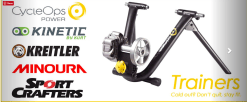 As a cyclist, you can either hate the winter, or make the best of it. Some bundle up and dress to embrace the winter chill while others opt for the dreaded trainer. As a cyclist, you can either hate the winter, or make the best of it. Some bundle up and dress to embrace the winter chill while others opt for the dreaded trainer.
Most cyclist have a love / hate relationship with the trainer. As a training aid, cyclist love it because it offers training options during poor weather and winter months. Yet, on the flip side, trainer rides can be boring, lead to muscle- specific fatigue, and basically, offer uninspired riding. Ugh. Is there a way to make it work? Yes! Fortunately, there are now many apps that make your time on the trainer more productive and entertaining. Additionally, these apps record your workout so you can analyze your effort and get your best bang for the buck workout wise.
The post, Choosing the Right Indoor Cycling App, offers a list of apps and a description of how they function to help you decide which is best for you. Some of our favorites from the list include Zwift, CycleOps Virtual Training, and TrainerRoad.
Granted, apps can make your ride more enjoyable; yet, having the right equipment can make a difference too. When we’re talking about equipment, sure, we mean having your road bike on the trainer, but we’re also talking about having a fan, a trainer tire, a riser block, a sweat towel, a trainer mat, and indoor riding clothes. If you are using a basic trainer, you may also want a cadence sensor, a power meter, and a heart rate monitor. You might not think all of these cycling accessories add up to a great trainer workout, but if you’re looking to take your training to the next level, having the right bike parts helps support motivation and training consistency.
If you find yourself really averse from riding the trainer. Break your workout in half. Spend half as much time on the trainer and the other half running, hiking, or doing another sport. One way to do this is to avoid long rides on the trainer all together. Year round strength training for cyclists matters and substituting your indoor rides with strength training will do more for your cycling later on in the season than doing another trainer session. In fact, a one hour hard trainer workout will do more to improve your cycling and race fitness than 2 to 4 hours easy on the trainer. So, plan your time on the trainer accordingly.
Indoor rides are not a replacement for outdoor rides but with the right bike parts, cycling apparel, and equipment, indoor rides can be fun and beneficial.
|
1 Comment | Peak Cycles Bicycle Shop | Tagged: bike parts, CycleOPs Virtual Training, cycling accessories, cycling apparel, cycling apps, trainer, TrainerRoad, winter cycling, Zwift | Permalink
Posted by staffwriter8
January 5, 2017

Peak Cycles/ BikeParts.com Teem Rider enjoying a Fat Bike
Fat biking is abuzz in Colorado! Colorado is already a favorite state for cyclists due to the mountainous terrain, rugged trails, scenic views, and outdoorsy population. But now, Colorado is a hot destination for a new phenomenon in the cycling world: Fat Biking.
If you’re looking for a fun way to enjoy riding during the colder months or if you are looking to jump start your 2017 training, then consider starting the year off right by racing a fat bike. Following is the 2017 Fat Bike Race Calendar.
January 2017
February 2017
March 2017
April 2017
Granted, racing implies you actually have a fat bike. But if you don’t, you can demo one of our Specialized FatBoys at our store! And if you want even more fat bike ideas, or need for cycling apparel, bike parts, and cycling accessories, stop into Peak Cycles Bicycle Shop. We would love to help you!
1 Comment | Peak Cycles Bicycle Shop | Tagged: 2017 Fat Bike Race Calendar, bike parts, Colorado Fat Bike Races, cycling accessories, cycling apparel, fat bike | Permalink
Posted by staffwriter8
December 15, 2016
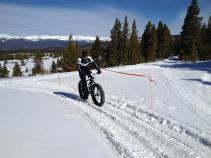
Demo a Fat Bike at BikeParts.com
Many holiday shoppers are looking to gift a different type of gift this year. Moving from purchasing products to gifting experiences. But what does that mean for the shopper who’s favorite cyclist has everything? it means, instead of purchasing more cycling apparel and cycling accessories, purchase gifts that offer an experience. When you think about it, bike riding is a joyous adventure in and of itself. Following are our favorite cycling experiential gifts worth giving.
Gift a Bike fit. Does your cyclist complain of hands falling asleep while riding? Or shoulder or neck pain after a long ride? A bike fit isn’t just for professional riders – they are for anyone who rides whether they are a beginner or advanced rider. A bike fit helps ensure riding comfort but it also impacts technique which is crucial to preventing overuse injuries and how an athlete rides. Consider the gift of giving your favorite cyclist a bike fit for Christmas. This will aid your cyclist in pain free and enjoyable riding all year long. The bonus on this is that , not only can we help them with the fit, but we carry all the bike parts required to get the bike in the very best setup for their riding needs. Give us a call (303) 216-1616 or stop by the shop in Golden to schedule your bike fit.
Demo a fat bike! That’s right! Fat bikes are all the rage – they thrive in snow, sand, desert, bogs and mud as well as riding what is considered normal mountain biking. In fact, fat bikes are the fastest growing segment in the bike industry. Book a fat bike demo for your favorite cyclist that will up the giggle factor to their normal winter riding program. Who can’t smile while riding a fat bike?
Power Up! Is your cyclist a data junkie? Then, this is the ideal gift for your favorite cyclist! The main idea behind using cycling training tools is to dial in training to optimize performance as it relates to specific goals and objectives. Our post, The Best Training Aids to Launch into Spring Cycling, dives into the benefits of training with power. As for which power meter to purchase, consider our most popular one, Stages Power Meters, beginning at $1000. Stages Power meter is the lightest, smallest, most technologically advanced unit available today. Another option is the Pioneer Power Meter offered at $2000 and is a bit more sophisticated. A third option is a company that’s been around for a while now – PowerTap Power Meter. Using power data elevates the cycling experience offering new challenges unavailable without one.
Relax and Recover. Many cyclist push themselves relentlessly without a break or even listening to their bodies until their bodies are injured. Gift an experience of relaxation. Consider a gift certificate for a message or a yoga class. Another option is the ongoing gift of recovery using compression. Medical compression stockings have been used to treat poor blood flow for many years. Recently, the technology has been made available to cyclist of all levels. While the many claim it is difficult to prove that an immediate performance gain from wearing compression garments, many do claim that it lowers perceived muscle soreness the day after a big day on the bike and they can reduce the swelling of legs after prolonged sitting.
Finally, if all else fails, gift your cyclist with bike parts! Experimenting with new cycling accessories and parts has a way of increasing the enjoyment felt when riding a bike. So, indulge this holiday season and give a gift that keeps on giving!
Leave a Comment » | Peak Cycles Bicycle Shop | Tagged: bike fit, bike parts, compression, cycling accessories, cycling apparel, Experiential cycling gifts, fat bike, power meter | Permalink
Posted by staffwriter8
November 24, 2016
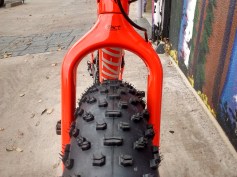
Fat Bikes at BikeParts.com
Thanksgiving is prefect for celebrating and sharing gratitude for the blessings in our lives. Yet, it isn’t exactly an ideal day for healthy eating and staying fit. Fortunately, you can make it through Thanksgiving with your figure and fitness intact. How to do it? It’s no mystery! Get a fat bike!
This may sound like a trick, but it’s not. Simply enjoy all the food you want during Thanksgiving while also splurging a bit by riding a fat bike. Riding a fat bike is so much crazy fun!
Imagine floating over snow and sand. Gliding over familiar trails discovering how your fat bike handles twists, turns, bumps, and jumps. You can practically ride a fat bike anywhere. And, riding a fat bike brings out your inner kid making you feel like an 8 year-old again, bouncing gleefully all over the trails. Maybe the idea of riding a fat bike is new to you. Following are common asked questions and answers about fat bikes.
How are fat bikes different than other mountain bikes? Many fat bike models today are similar to “normal” mountain bikes, which have slacker head tube angles, lower stand-over heights, thru axles, and tapered head tubes. The main difference is the tires. The wider ties have more traction in both dirt and snow. They climb better than almost any mountain bike and the fit tires provide greater cushion that feels like extra suspension. But what makes them special is they entice you to ride outside when it’s cold! According to the post, Fat Biking 101: 10 Things You Need to Know Before Biking in the Snow, most people do not ride when it is cold because, well, it’s cold. Fat bikes offer a unique experience and allow you to explore familiar trails in a new light. Fat biking lifts the winter doldrums by giving you a new freedom to ride off-road.
In what kind of conditions can I ride my fat bike? Fat bikes can ride pretty much anywhere. They do really well on dirt but they are also very capable in the snow. Packed snow will feel very much like riding on dirt. Pushing through heaps of freshly fallen snow will provide more of a challenge and there will be some days when riding is simply impossible. Remember, while sliding around on ice may be fun, ice is ice. The bike will still go down if you are not careful riding on slippery substances.
How do I stay warm on my fat bike in the winter? You have to think a little bit harder before and during your fat bike rides in the cold. Generally the most important tip for keeping warm is to layer, and to carry a pack to put your extra layers away. Some people prefer to wear ski goggles and a ski helmet, and lots of people wear winter boots. Poagies, insulated hand covers that slip over your handle bars, are also very useful for keeping your hands warm. Keeping your feet warm is key. Wearing arm boots, preferably water proof, with thick socks on flat pedals or clipless boots with multiple pairs of socks will help to keep your feet comfortable.
How do I keep my water from freezing? Even though you might not feel the urge to drink as much when riding your fat bike in the cold, it is still important to drink fluids. There are a couple of tricks your water from freezing. During shorter rides, carry an insulated water bottle and start with really warm water. You can also add electrolytes or other ingredients to change the freezing point of the fluid, but may find limited success. When using a CamelBak or something similar, stick the bite valve in your jacket and blow out all the water in your hose. You can also buy neoprene insulators for the hydration hose to help keep water as a liquid substance.
Should I use clipless or flat pedals on a fat bike? It’s your choice! The biggest problems people have making this decision is deciding how to best keep their feet warm. Having flat pedals will allow you to wear thick winter boots, which are more conducive to keeping your feet warm. However you can buy clipless boots that are designed to handle colder temperatures. Using a clipless pedal could prove annoying in snowy terrain if you have to dismount and remount frequently during your ride.
What kind of tires should I use? How wide? What pressure do I run? Tube vs. Tubeless? You have to match tire pressure with conditions. Softer snow conditions: 6psi. Harder conditions: 8-10psi. (much lower than the normal bike). Fat-bike tires are typically marked as 26 x 4.0 though most are really more like 26 x 3.7 or 3.8. The actual size of the mounted tire will vary depending on the rim width used for the wheel. Many riders prefer tubeless because they reduce over a point of rotation weight and they provide better traction.
What kind of fat bikes are on the market? The fat bike market has exploded in recent years. Brands include Specialized, Mongoose, Polaris, Kona, Gravity, Kawasaki, Borealis and more! Manufacturers are creating frames out of tons of different materials including aluminum, carbon, titanium, bamboo, real steel, and Wal-Mart steel. Most fat-bikes that you will come across have a fully rigid frame. However fat bikes with front fork suspension and full-body suspension have started to emerge. Finding the fat bike that works for you will depend on the type of riding that you do and, more importantly, your budget. However, at Peak Cycles Bicycle Shop, we are all big fans of the Specialized Fatboy Bike. We have found the Specialized Fatboy to be a highly rated, mid-range fat bike that is usable for a wide range of ages and skill-levels.
Where can I ride my fat bike? Fat biking is abuzz in Colorado. Colorado is already a favorite state for cyclists due to the mountainous terrain, rugged trails, scenic views, and outdoorsy population. But now, Colorado is a hot destination for the fat bike phenomenon. There are also a ton of really fun fatbike events across the nation.
Whew! Lots of questions but one final one. Are you feeling the urge to splurge this Thanksgiving? Enjoy mass quantities of food and take on this fun fat bike phenomenon! Demo a fat bike at Peak Cycles Bicycle Shop in Golden, Colorado. Check out our fat bike bike selections, cycling apparel, hydration strategies, fat bike bike parts, and accessories. Plus, get even more of your questions answered in person! Happy Thanksgiving!
Leave a Comment » | Peak Cycles Bicycle Shop | Tagged: bike parts, cycling apparel, fat bike, fat bike cycling apparel, fat bike demo, fat bike tires, mountain bike, pedals, poagies | Permalink
Posted by staffwriter8
November 17, 2016
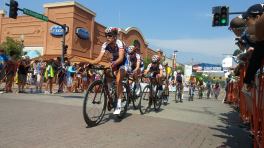 Most cyclists, whether competitive or not, enjoy being at the front of the pack. Sure, it’s safer, but it’s also cool to be in front. As the Thanksgiving Holiday is right around the corner, now’s the time to position yourself to be at the front of the pack – shopping that is!
Leading out the shopping season is Black Friday. From the start, you have a chance to cash in on bike components, cycling apparel, bicycle parts including trainers and all sorts of bike goodies. Here’s what you’re going to want to stock up on!
Start small and go for the usual suspects for stocking stuffers including multi tools, tubes, bottles, socks, head warmers, arm warmers, shoe covers, gloves, lube, energy bars, gels, chews and similar items. Add these to your wish list or invite family and friends to purchase them for you. You can never have too many of these items, so indulge!
Next, evaluate what is missing in your cycling program. Are you in need of new cycling apparel? As in jerseys, layering options, or cycling shoes. What about your bike? Do you need new bike parts? And, don’t forget about nutrition and supplements! Now’s the time time to select the cycling accessories and other much needed items that you would like to see show up under the tree.
Yet, let’s not forget for a moment that holiday wish lists and making the most of Black Friday is all about what you need, right? Isn’t it about dreaming big? Which training elements would you love to have, but don’t? A new heart rate monitor? Or a power meter? The main idea behind using cycling training tools is to dial in training to optimize performance as it relates to specific goals and objectives. Our post, The Best Training Aids to Launch into Spring Cycling, dives into the benefits of training with power. As for which power meter to purchase, consider our most popular one, Stages Power Meters, beginning at $1000. Stages Power meter is the lightest, smallest, most technologically advanced unit available today. Another option is the Pioneer Power Meter offered at $2000 and is a bit more sophisticated. A third option is a company that’s been around for a while now – PowerTap Power Meter.
Don’t stop there! Drop the hammer and make your wish list epic! Go big! Get a new road bike, mountain bike, or fat bike! Take advantage of Black Friday or Cyber Monday for savings and specials. Great road bicycles don’t have to come at a hefty price tag either. Right now, in our Golden, Colorado shop we have a variety of bikes that are light and fast for racing. If a new bike isn’t in your budget, then start with the basics. Have good equipment. Meaning, add some bike parts to your list.
As a reminder, our shop BikeParts.com offers a huge selection of road bike parts, mountain bike parts, BMX bike parts and more. If you need it for your bike, then we have it! Because we sell our bicycle parts online, we are able to help customers all over the world helping them – and you – to get the gifts you want and need.
Leave a Comment » | Peak Cycles Bicycle Shop | Tagged: bike components, bike parts, cycling apparel, fat bike, heart rate monitor, mountain bike, power meter, road bike, trainers | Permalink
Posted by staffwriter8
November 3, 2016
Training Tips at BikeParts.com
With the time change this upcoming weekend, darkness will fall earlier each day making it more challenging to fit training rides in the schedule. But fear not, at Peak Cycles Bicycle Shop, we have training strategies that can help you make the best of the daylight and night hours!
Given that the days with long sunshine hours are ending, there are ways to make the most of the daytime hours. It requires a little planning and creativity. Also, time management plays an important role here. Scheduling your workouts in your calendar; shifting meetings and family obligations to early morning, late afternoon and early evening; and optimizing your lunch hour as ride time, are three areas that can assist in getting your scheduled training in during the daylight hours. Again, the idea here is to create a plan and stick to it. If you plan a ride during the daylight hours and miss it, then it creates stress on how to make that ride up. However, as other bike enthusiasts know, riding at night can be fun, relaxing, and a delightful end to the day. If you are up for a little adventure, here’s how to make night time riding work for you!
Be a well lit cyclist. Purchase cycling apparel that is visible. There are options to choose from including vests and ankle bands. Also, reflective tape is a good idea. 3M makes black reflective tape that is great to put on black wheels. You do not notice it during the day and it shows up white at night. And, as the temperature drops, it’s hard to know what to wear when it’s 50 degrees and sunny outside versus 30 – 35 degrees and cloudy. Riding in transitional weather can be a challenge! But, with clothing that is versatile, lightweight, and easy to pack down, you can find a cycling wardrobe that works for you. Watch our video, How to Dress for Winter Cycling to get ideas.
Explore your ride options. Riding in the dark makes the riding of any technical section immediately harder than in the day. It takes a good while to overcome this, so don’t set yourself a task to ride the most demanding trails or bike paths you have. Ease yourself in as the nights start earlier and downgrade your expectations. Remember, you will inevitably ride and travel more slowly than in daylight. A way to overcome this is to invest in a good set of lights. With that being said, be mindful that your route doesn’t exceed your lights battery capacities.
Become a fan of bike maintenance: Experiencing mechanical difficulties in the cold and at night is not fun! A well maintained bike is a fun bike to ride. Yet, for some, bike maintenance can be a chore. Having the right set of bike components and bicycle tools can make all the difference. When prepping your bike for for the colder temps and night riding, there are several things you want to do to keep your bike in good working order. A good thing to always do is to wipe down and inspect the frame. As the weather changes, rain, snow, ice, and road elements pose different cleaning challenges to your frame and bicycle parts. Consider using a stiff, soft-bristled brush to knock off any chunks of dried-on mud that may be on your frame or wheels. Then, follow that up by taking a rag to your bike, wiping it down generally all over to get off any remaining dust or dirt.
Also, remember to lube your chain and cables. As unglamorous as chain lube is, it is a necessity for winter riding. It will keep your bike parts in working order and squeak free! There are many lubes to choose – wet vs dry lube. As conditions vary, you may want to have a couple of different choices on hand. Finally, since you can’t see what you are rolling over in the dark, it’s a good idea to frequently inspect tires, wheels, and brake pads. Check that there is adequate air pressure in the tires. Check that there aren’t any cuts or nicks in the sidewall or tread of the tires. You’ll want to make sure the brake pads are not worn. And, remember to inspect where the brake pads hit the rim; they should contact the rim evenly on both sides and not rub the tire in any way that may cause a flat.
Daylight riding or riding at night – it’s all good! As you can see, there’s no need to fear the time change. The time change can mark the end of the season and bring on a new adventure. Embrace creativity and plan your rides during daytime hours. Or, seek adventure and embrace the challenge and make night riding work for you!
1 Comment | Peak Cycles Bicycle Shop | Tagged: bicycle tools, bike maintenance, bike parts, cycling apparel, How to Dress for Winter Cycling, lights, night riding, vest | Permalink
Posted by staffwriter8
October 27, 2016

PhysioPhyx LPR available at BikeParts.com
As athletes, we all want to get fitter, leaner, stronger, and faster! Regardless of age or athletic ability, inherent in every cyclist wish list is a secret weapon to get faster without expending more effort. As such, many turn to nutritional supplements. And, there’s good reason to do so too! As it turns out, many products, including beet and cherry juice, are proving to aid in recovery and providing performance-enhancing benefits for endurance athletes. Here’s an overview of what you need to know.
The benefits of tart cherry juice for endurance athletes includes better sleep, ability to fight inflammation, reduced muscle pain, and immunity boosting. Sounds great, right! And drinking tart cherry juice tastes great and is a nice bedtime snack. To maximize its effects, Coach Lynda Wallenfels suggest mixing in 20g of the slow digesting protein casein to boost protein synthesis while you sleep. Also, consider taking another dose of tart cherry juice the following morning to maximize the performance-enhancing benefits it has to offer.
Another natural food worth investigating is beet juice. A study published in the International Journal of Sport Nutrition and Exercise Metabolism suggests adding some nitrate-rich beetroot juice to our workout plan can enhance our stamina, strength, and endurance. How does it work? According to the post, Using Beet Juice to Improve Performance, “Beets contain a large amount of inorganic nitrates. These compounds are the precursor to a very important signalling molecule that our body needs to function- Nitric Oxide2. NO is made naturally within our bodies but we can dramatically increase its availability by eating nitrate rich food. Among other roles, NO acts as a vasodilator in functioning skeletal muscle, increasing the size of blood vessels to allow more oxygen flow. “ Granted, beets are not going to make you fast on their own, but for the athlete that cares about marginal gains, they could provide the race winning boost.
In addition to food based nutrition for enhanced performance, there are cycling specific supplements too. At Peak Cycles Bicycle Shop, a favorite nutritional product available post ride is PhysioPhyx. Here’s what we like about this product. PhysioPhyx LPR takes recovery nutrition to a new level of support and performance by delivering a powerful, evidence-based blend of Carbohydrates + Protein + Leucine. This potent combination of nutrients has been precisely formulated to help ensure you rapidly and effectively restore muscle energy (glycogen), minimize muscle soreness, stimulate muscle repair and speed training adaptations after moderate, intense and exhaustive exercise or competition. In fact, recent studies have shown the nutrient trio of Carbs + Protein + Leucine taken after exercise creates an absolute ideal environment for your body to quickly go into recovery overdrive. Who doesn’t like “overdrive”?!
Overall, a solid training program combined with a healthy lifestyle provide the greatest platform for sustained and improved performance. Adding supporting elements like these mentioned can help. While you are at it, you can make improvements to your bike too! Improve bike performance with lighter bike parts. Minimize mechanicals by replacing old drivetrain parts with new ones. Support your body with a bike fit or cycling apparel like compression gear for recovery. Again, there may not be a single best option for fitness gains but every little bit helps!
Leave a Comment » | Peak Cycles Bicycle Shop | Tagged: beet juice, bike fit, bike parts, cheery juice, compression gear, cycling apparel, drivetrain parts, PhysioPhyx | Permalink
Posted by staffwriter8
October 20, 2016

Fall Colors along the Front Range
Have you noticed the leaves changing on the trees lately?
The Front Range tree leaves are exploding with a vibrant mix of autumn hues. What better way to enjoy the brisk temperatures and vibrant colors of the leaves turning than from the view of mountain bike or road bike? The added bonus is maintaining fitness through the fall and even building it well into the winter months.
True, we love fall rides, but it does take a little extra planning. The days are shorter and the weather is becoming more unpredictable. That’s why it’s more important during the fall season to have the right cycling apparel for the type of riding you are doing.
Ask yourself, what clothing do you need to wear in different weather conditions? Do you have waterproof and wind resistant clothing? Do you have enough of the basic cycling necessities, as in leggings? Arm warmers? Knee warmers? Scull cap? What about your base layers? Do you have enough of them or do you need to add in some fleece lined clothing?
Staying warm, dry, and comfortable is key to riding during the fall season. Lucky for you, at Peak Cycles Bicycle Shop, we can help you with all of your cycling apparel needs. In fact, we’ve got a great end of the year sale on 2016 bikes and cycling apparel in store right now! At a minimum, these are the essential fall riding clothes you need to have on hand.
1. Wind Vest – The wind vest is one of the most used pieces of cool weather gear. It keeps your core body protected from frontal winds, but vents in the rear to keep you from overheating. The wind vest is also very versatile and can be added to different clothing combinations, using it with regular jerseys, winter jerseys, and arm warmers. It’s also easily stowed in a pack or shirt pocket.
2. Wind / Rain Jacket – It’s always a good idea to keep a water resistant jacket handy when rain is in the forecast.
3. Arm Warmers – Arm warmers are a must during the Fall season. While they don’t take up much room, they are great for temperature control.
4. Full Finger / Windproof Gloves – When riding in cooler temps, one of the first things to get cold are the fingers. Protect your hands with full fingerers and / or windproof gloves. A popular item to consider are the Endure gloves.
5. Knickers, Knee Warmers, and Pants – As the temperatures drop, it’s a good idea to cover your knees. Many cyclist prefer tights whereas others prefer leg warmers. There are also knickers which allow more airflow over the legs, and they are good for those in-between days. Consider trying out each option and experiment to dial in your preference.
6. Head Band or Skull Cap – The vents in your helmet that are such an asset during the summer months become a major liability when the temperatures begin to drop. To prevent from losing heat from your scalp, be sure to wear a thin skullcap or headband under the helmet
7. Wool Socks – Keeping your feet dry and warm can be a challenge in the cold weather, but nice wool socks are your best bet.
8. Shoe Covers – Shoe covers, also known as booties, cover the exterior of your shoes and protect from cold and wind. There are several options: some that cover just the toes and others that encompass the entire foot. Toe covers are great for Fall but as you transition to Winter riding, you may wish for a pair that covers your entire foot. If you’re not a fan of shoe covers, opt for a warmer shoe all together! We have two favorite options. The Giant Sojourn cycling shoes have a stiff and grippy bottom which are good for walking. A great option for bike commuters. The other favorite is the Defroster cycling shoe. It’s a great option for fall and winter riding and especially on the cold days because these shoes doesn’t require shoe covers.
9. Lights – At the end of this month, the days will be much shorter! Plan ahead and get your lights ready. Get a red blinker for the rear that mounts to the bike or your pack, and a decent headlight for the front.
10. Tool kit – The bicycle tools needed to have on hand in inclement weather matter. Discover what the best bike parts for fall commuting and build a tool kit that meets your needs.
Which essential items are missing from the list? Make note of it and stop by the shop to check out all of the cycling apparel we have in stock and on sale. Whether you are enjoying the vibrant mix of autumn hues from a scenic country road, a bike path, or a cyclocross race course, fall bike rides in Colorado are the best way to get up close and personal with the season’s colors – enjoy!
1 Comment | Peak Cycles Bicycle Shop | Tagged: arm warmers, base layers, bicycle tools, bike parts, bike sale, cycling apparel, fall cycling, knee warmers, lights, mountain bike, wind vest | Permalink
Posted by staffwriter8
October 6, 2016
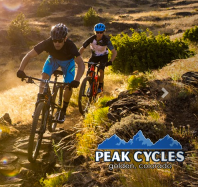 As we transition from summer to fall, the Colorado mountain colors are beginning to explode into a vibrant mix of autumn hues. The hot, summer days are replaced with cooler temperatures making riding even that more enjoyable. What better way to enjoy the brisk temperatures and vibrant colors of the leaves turning than from the view of mountain bike or road bike?
However, not all cyclist are motivated to ride in the fall. As we mentioned last week in our post, Fall Isn’t End of Season – It’s the Beginning of Next Season. Here’s Why , Fall is actually the best time to transition from peak cycling form to a relaxed one. Doing so doesn’t include missing rides. It means shifting your mindset to embrace fall cycling while actually boosting your cycling performance for next year.
You can make the most of fall riding easily in Colorado because there are so many options available to you. Consider adding one or more of these cycling events to your October schedule. You’ll enjoy the added bonus of maintaining fitness through the Fall and even building it well into the winter months.
Road cycling: 10/9 Ride of the Ancients
Mountain bike: 10 /8 12 Hours of Penitence MTB Race
Cyclocross races:
10/15 – 10/16 US Open of Cyclocross
10/23 Shimano CX Series
10/30 Shimano CX Series
It’s important to note, that as you make the transition from summer to fall to winter riding safely, it’s wise to make sure that your bike is working and that you have the proper cycling apparel to keep you warm and also motivated to ride in the cooler temps.
Just as much as your body has taken a toll from training stress over the season, so has your bike! At Peak Cycles Bicycle shop, we recommend getting a tune-up and replacing workout bike parts. The summer rush has slowed a bit and we have service slots available. Call 303-216-1616 for an appointment. See you soon!
Leave a Comment » | Peak Cycles Bicycle Shop | Tagged: 12 Hours of Penitence MTB Race, bike parts, cycling apparel, Fall bike riding, mountain bike, Ride of the Ancients, road bike, Shimano CX Series, US Open of Cyclocross | Permalink
Posted by staffwriter8
September 22, 2016
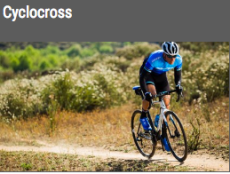 Cross season begins in the early fall and runs through the end of December. You know, the time of year that those of us who live in places that get real, bona fide winters want to hang up our bikes and hibernate under down blankets. But In Colorado, we don’t do that because it’s cross season and cross is worth going out in the cold for. Fortunately, the cooler temps and bad weather has escaped us so far; however soon on the horizon, cyclocross racers will be greeted with mud, cold, and nastier racing conditions. Makes for more fun, right? Absolutely!
Cyclocross is a wonderful way for road cyclists and mountain bikers to extend their competitive seasons and get a head-start on training for next season. The intensity of cyclocross racing provides a training stimulus that’s very difficult to replicate with standard interval training during the fall and winter, especially as the temperatures fall and athletes turn primarily to indoor cycling.
- Cyclocross promotes silky smooth pedaling
- Cyclocross develops your strength and power
- Cyclocross improves your bike handling skills
- Cyclocross teaches you race techniques
- Cyclocross reduces off-season weight gain
- Cyclocross toughens you up to fair better in inclement riding conditions
- Cyclocross improves seasonal motivation
- Cyclocross offers a full body workout
- Cyclocross maintains current fitness and can improve fitness
- Cyclocross offers a mental break from your current cycling regimen and training focus
- Cyclocross provides high intensity training
- Cyclocross means getting to purchase a new cyclocross bike, cyclocross tires, and an assortment of new bike parts!
A final reason to race cyclocross is because it is exhilarating FUN! Whether you are a veteran of cyclocross or a newbie, check out our cyclocross bikes online at bikeparts.com. Dial in the best bike parts and cycling accessories. Get help with your bike fit and setup and be sure to have all the right cycling apparel you need for a successful cyclocross season.
Leave a Comment » | Peak Cycles Bicycle Shop | Tagged: bike fit, bike parts, BikeParts.com, cycling accessories, cycling apparel, cyclocross, cyclocross bike, cyclocross racing, tires | Permalink
Posted by staffwriter8
September 15, 2016

Cycling Accessories for Your Cyclocross Gear Bag
Cyclist in general are obsessed with weight. As in, how much their bike parts weigh? How heavy is the bike? How much is the the scale lying to you?
And, the list goes on. Ironically, cyclocross is the only cycling discipline that counters the weight obsession. That is at least, in the preparation department. Everything else applies. Cyclocross races are short, ranging from 30 minutes to an hour depending on category, yet they require the most equipment prep of any bike racing discipline. Part of that relates to the time of year and the variability of the weather. Racers need to be ready to deal with wind, rain, snow, hail, ice, mud, fog, etc. The gear preparation and the cycling apparel adds up. There is gear for warming up, gear for racing, gear for cooling down, gear for the bikes and gear for creating a fun and enjoyable atmosphere. In addition, it is often not enough to have a single piece of equipment or clothing; several may be needed for the day.
Which ultimately begs the question- What do you bring to a cyclocross race? It will take time to nail down the packing system that works best for you; there are lots of individual preferences. However, we’ve compiled a checklist for you. For starters, plan to use a gear bag that opens up wide and allows you to see everything within quickly. Fill it up with these items:
Clothing
- Rain jacket, rain pants, waterproof boots.
- One set of jersey/shorts and one skinsuit. One to warm up in, one to race in. Having extras is good too.
- Long sleeve jersey for warmups.
- Extra base layers.
- Vest, arm warmers, leg warmers, knee warmers. These are for warm-ups.
- Two pairs of shoes. Race pair and a backup just in case one breaks or the first pair is wet and muddy from pre-riding the course.
- Two helmets. Again, in case of a mechanical.
- Two pairs of gloves. Depending on the weather, you may opt for four or five pairs. Short and long-fingered race gloves, a light, medium, and heavy pair of warm-up or standing around gloves.
- Tights or warm up pants.
- Two to three pairs of socks, preferably wool.
- Large garbage bags or ziplock bags to store wet and muddy clothes and gear.
- Winter jacket.
- Cycling cap and or a beanie.
- Sunglasses with multiple lenses.
Gear and Equipment
- Bike. Make sure it’s clean, tuned-up, and ready to ride. If you need bike maintenance, bring it into the shop! Also, remember to take off the water bottle cages, your saddle bag, and anything else you’ve attached to the bike.
- Pump, tools, chain lube, and other maintenance items.
- Safety pins to pin your number to your jersey.
- Towels: large and small. Use the smaller ones for clean up and the larger one for changing clothes. You might opt for extra towels to wipe down the bike.
- Baby wipes – great for cleaning everywhere after the race
- Heat packs to stay warm prior to and post race.
- Water bottles for before and after the race.
- Energy drink mix, gels, bars, and nutritional items.
- Cash for coffee, food, and extras at the venue site.
- Folding chairs
- iPod or music player – good for warming up.
- Water – bring at least one gallon of water, not only for drinking, but for cleaning.
- Stationary trainer for warming up and cooling down. FYI, bring an extra rear wheel. Warm up on the trainer with a regular tire.
- Spare wheels –Bring wheels with tires that have different treads for different conditions.
Now that you have your gear bag ready, it’s time to race cross. If you are new to cyclocross, check out our cyclocross bikes online at bikeparts.com. Dial in the best bike parts and and tire choice. Finally, register for an upcoming cross race! Click here for a list of races along the Front Range for September. Bring on the cowbell friends!
3 Comments | Peak Cycles Bicycle Shop | Tagged: & KNEE WARMERS/COOLERS, ARM, bike helmet, bike nutrition, bike parts, BikeParts.com, cold weather gloves, cycling apparel, cyclocross gear, Cyclocross race, LEG, race preparation, rain jacket | Permalink
Posted by staffwriter8
September 8, 2016
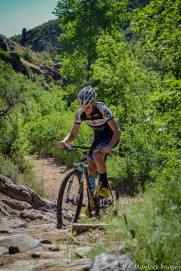 Autumn is upon us. And while the weather is still looking similar to our old friend summer, it is bound to drop in temperature very soon. Many cyclist grieve the loss of summer; yet, fall bike riding offers the chance to enjoy cooler temperatures, view the changing colors of the leaves, and enjoy the fitness gains achieved over the summer months.
Officially, fall begins September 22 and while we’re only two weeks away from the official fall season, you can see the season transitioning. Days are shorter. The temperatures are cooler. Kids are back in school. And, sadly, vacationing is nearing an end. Now is the time to mark your calendar to get in your favorite rides before winter heads our way.
With that in mind, which Front Range trails should you have on your bucket list? Following are some of our favorites.
- Buffalo Creek
- Centennial Cone
- White Ranch
- Mount Falcon
- Lair O’ the Bear
- Green Mountain
- Apex + trails
- Golden Gate Canyon
- Hall Ranch
- Lake Pueblo
An essential element to successful fall cycling is knowing what to wear. As the seasons transition from summer to fall, the temperatures change, the days are shorter, and the easy “go to clothing” options for riding are replaced with additional items to keep us warm, dry, and safe. Always aiming on the safe side, at Peak Cycles Bicycle shop, we recommend getting a tune-up, having a set of reliable lights and wearing the right bike clothing. Regarding clothing options, following is our list for smoothing transitioning through the season.
Wind Vest – The wind vest is one of the most used pieces of cool weather gear. It keeps your core body protected from frontal winds, but vents in the rear to keep you from overheating. The wind vest is also very versatile and can be added to different clothing combinations, using it with regular jerseys, winter jerseys, and arm warmers. It’s also easily stowed in a pack or shirt pocket.
Wind / Rain Jacket – It’s always a good idea to keep a water resistant jacket handy when rain is in the forecast.
Arm Warmers – Arm warmers are a must during the Fall season. While they don’t take up much room, they are great for temperature control.
Full Finger / Windproof Gloves – When riding in cooler temps, one of the first things to freeze is the fingers. Protect your hands with full fingerers and / or windproof gloves.
Knickers, Knee Warmers, and Pants – As the temperatures drop, it’s a good idea to cover your knees. Many cyclist prefer tights whereas others prefer leg warmers. There are also knickers which allow more airflow over the legs, and they are good for those in-between days. Consider trying out each option and experiment to dial in your preference.
Lights – Within a month, the days will be much shorter! Plan ahead and get your lights ready. Get a red blinker for the rear that mounts to the bike or your pack, and a decent headlight for the front.
Tool kit – The bicycle tools needed to have on hand in inclement weather matter. Discover what the best bike parts for fall commuting and build a tool kit that meets your needs.
Why is all this important? Because having access to resources, tips, and a supportive environment makes it easier to enjoy all the benefits cycling has to offer. It gets you outside – on the bike and riding! As you can see, it’s easy to embrace the transition from summer to fall when you have great rides to look forward to riding. Being mindful of the best clothing options, cycling apparel, bike parts, and nutritional needs during the changing season helps too! Happy Trails to you!
2 Comments | Peak Cycles Bicycle Shop | Tagged: Apex Park, arm warmers, bicycle tools, bike parts, Buffalo Creek trail system, Centennial Cone, cycling apparel, cycling gloves, cycling pants, Golden Gate Canyon State Park, Green Mountain MTB trail, Hall Ranch, knee warmers, Knickers, Lair O' the Bear, Lake Pueblo State Park, Mount Falcon, White Ranch Trail, wind vest | Permalink
Posted by staffwriter8
June 23, 2016
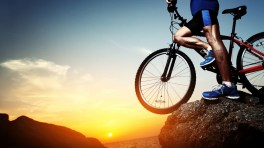 At the end of a strenuous training ride or race, cyclist quickly reach for their recovery drink with the intention of refueling their body to prepare for the next round of hard cycling efforts. But what exactly is the goal of “recovery”? What are the best ways to recover in the training cycle? And, is there a way to accelerate recovery? Here’s a hint: recovery is not just drinking a carb loaded fluid after a hard effort.
Think of it this way, according to Rowe and King, “all effective training plans are structured and involve carefully placed recovery phases. A recovery phase can be a single day in the middle of a training block, or up to a week to really recovery and peak before a specific event. However, a common mistake made by cyclists is to repeat the same training, week after week, all season or all year round. It is the progression and overload, paired with recovery that leads to improvement. Without allowing yourself to recover, you will stop making progress, increase the risk of injury and illness, run the risk of overtraining.”
Here’s what’s happening when you train – you stress your body and break down your muscles. According to Joe Friel, endurance coach and author, “recovery days come in two forms: days of complete rest (“passive” recovery) and days with light exercise (“active” recovery). Passive recovery is generally best for novices. If they take the day off from exercise the day after a workout they will improve greatly. For the pure novice any form of training may very well be too stressful. As fitness improves, the recovery days are better spent doing some very light exercise. For the novice this could be light cross training in a sport such as swimming or cycling. Novice runners should never run on a recovery day. It’s simply too stressful even for somewhat advanced novices. The advanced, experienced athlete is best advised to train lightly on a recovery day as this maintains some of the most basic gains made in previous, harder sessions, especially economy of movement and aerobic endurance. Given the advanced athlete’s high level of fitness, such a light training session is not stressful. But it must be easy. Making these sessions too hard is the most common mistake in training at this level. Regardless of one’s level of experience or fitness, the harder the hard workouts, the easier one’s recovery days should be.”
Is there a way to accelerate recovery? Whether recovering from a hard training effort or as part of your training cycle, there are quite a few actions you can take to facilitate quicker adaptations beginning with your ride style. At the completion of your ride, be mindful to cool down appropriately. Spin your legs out and get your heart rate down. Immediately following your ride, Carrie McCusker, an endurance coach, recommends to “restore fluid and electrolyte balance, to replenish muscle and liver glycogen stores, and to stimulate protein synthesis. You can accomplish this by consuming carbohydrates, protein and fluids within thirty to sixty minutes of finishing your workout. Based on research data, athletes are encouraged to utilize this “glycogen window” to restore the muscles. It is particularly important for glycogen-depleting workouts, those that are longer than two hours or those with high intensity efforts, or if the day involves two or three workouts.”
Included in the recovery process is ongoing proper nutrition, sleep, rolling or massage, stretching, compression, and low intensity activity. Compression gear has risen to new heights in recent years. Medical compression stockings have been used to treat poor blood flow for many years. Recently, the technology has been made available to cyclist of all levels. While the many claim it is difficult to prove that an immediate performance gain from wearing compression garments, many do claim that it lowers perceived muscle soreness the day after a big day on the bike and they can reduce the swelling of legs after prolonged sitting.
There are lots of resources online for you to learn about recovery best-practices and get the fuel and equipment you need for adequate recovery. Bikeparts.com has lots of different types of nutritional supplements all in one place as well as bikes, bike parts, cycling accessories, and cycling apparel that can help you with your recovery training. And if you just want to talk to an expert, stop into Peak Cycles Bicycle Shop in Golden, Colorado to talk to one of our competitive cyclists. Have fun with your summer training!
2 Comments | Peak Cycles Bicycle Shop | Tagged: active recovery, bike parts, BikeParts.com, compression gear, cycling accessories, cycling apparel, nutrition, nutritional supplements, passive recovery, recovery, recovery drink, training cycle | Permalink
Posted by staffwriter8
June 9, 2016

New Specialized Merino wool jerseys SL & RBX
– Keeps you warm if you are cool
– Keeps you cool if it’s warm outside – evaporative cooling
Studies suggest bike commuting is one of the best ways to stay healthy.
Fortunately, the number of bicyclists is growing rapidly from coast to coast. The National Household Travel Survey showed that the number of trips made by bicycle in the U.S. more than doubled from 1.7 billion in 2001 to 4 billion in 2009. That’s great news!
But as the Summer months beckon with warmer temperatures, is there a way to getting around safely, happily, and efficiently on two wheels? The heat discourages many from hopping on the bike to ride to work or to run errands. Yet, bike commuting improves fitness, health, saves money, and also benefits the environment by keeping one less car on the road. If you aren’t a bike commuter now, maybe this Summer you will be. And, if you already bike commute, perhaps you plan to commute by bike more frequently.
To get the most out of your bike commute it’s best to plan a good route. Knowing a clear path to your destination avoids the frustration of getting lost while also prevents overheating and sweating unnecessarily. Learn how to pick a route you like. Google maps for cycling is a good option. If you are new to bike commuting, you will want to give yourself more time than you need. This allows for a pressure free experience.
Invest in commute specific cycling apparel. Consider wearing clothing that is comfortable for your ride, as well as, your planned daily activity. Good options for men include the new Specialized Merino wool jerseys. They keep you warm if you are cool and cool if you are warm outside with evaporative cooling. We have a woman’s option too! Casual women’s shirts with short and long sleeved in Marino wool are great to wear for cool morning rides into the office or running errands on the bike.
Aside from clothing options, a few necessary cycling accessories to have on hand include a good helmet; a repair or maintenance tool kit; a lock; and a way to carry things. This could be as simple as a messenger bag or as elaborate as a set of touring panniers. These are the basic necessities needed to secure your road or mountain bike while you’re away at work or running errands. Depending on your final destination, you may consider packing a “clean up kit” to freshen up after your ride. Your clean up kit can be as simple as having some baby wipes, deodorant, a comb, face wash and sunscreen.
A critical factor in bike commuting is having fun. Fun includes enjoying the adventure, as well as, feeling confident in riding the bike paths and the roads. If you are new to bike commuting and unfamiliar with the rules of riding on the road, register for our Bike Safety Class on June 16th. This is a great opportunity to get caught up on bike safety and the current rules of the road in Colorado. Learn what the laws are for cyclists; how you legally and appropriately ride on public roads; what the rules are for turning, stopping, passing; your rights and obligations; become educated on bike safety, commuting and much, much more! And…it gets even better! On the night of the event, Peak Cycles will be offering a 15% discount for all items, including bikes. Keep in mind, discount excludes already discounted bikes and items.
Embrace bike commuting this summer! Make it an epic summer and set personal goals for the miles you want to ride this season.
1 Comment | Peak Cycles Bicycle Shop | Tagged: bike commuter, bike commuting, cycling accessories, cycling apparel, Helmet, maintenance tool kit, mountain bike, Specialized Merino wool jerseys | Permalink
Posted by staffwriter8
June 2, 2016

Avoid Muscle Cramps! PhysioPhyx LPR available at BikeParts.com
June is finally here! Welcoming the summer months also means riding in hotter temperatures. As the weather improves, it makes it easier to increase your mileage and saddle time. Yet, to the unprepared cyclist, riding longer in hotter weather can be counterproductive to training.
Over enthusiastic riders may take on too much, suffer from improper fueling, and maybe even fatigue from not having a properly fit bike or the ideal bike parts for the ride planned. The best approach is to ease into the summer riding months and aim to balance nutrition, hydration, recovery along with the increased mileage and intensity.
Not sure how to do it? Well, at Peak Cycles Bicycle Shop, we’ve got you covered. Read our favorite posts to optimize recovery, avoid heat stress and unnecessary fatigue, and actually train effectively in the warmer temps.
There are lots of resources online for you to learn about recovery best-practices and get the fuel and equipment you need for adequate recovery. Bikeparts.com has lots of different types of nutritional supplements all in one place as well as bikes, bike parts, cycling accessories, and cycling apparel that can help you with your recovery training. And if you just want to talk to an expert, stop into Peak Cycles in Golden, CO to talk to one of our competitive cyclists. Have fun with your summer training!
Leave a Comment » | Peak Cycles Bicycle Shop | Tagged: bike parts, BikeParts.com, bikes, cycling accessories, cycling apparel, Eat Smart, How to Dial in Your Race Day Nutrition Needs, Keys to a Successful Cycling Race: Think Smart, nutrition, nutritional supplements, On Bike Nutrition: It’s Different for Girls, Our Favorite Nutritional Products to Avoid Muscle Cramps, Why Our New POC Cycling Gear Makes You a Better Rider | Permalink
Posted by staffwriter8

 Peak Cycles - BikeParts.com Blog