July 24, 2014

BikeParts.com biking in Breckenridge, Colorado
The lifestyle here in Colorado celebrates the great outdoors. Even better, Colorado has some of the greatest road bike and mountain bike rides in the country. Some rides are shorter and convenient whereas others offer steeper, longer climbs and extended distances. Locals and vacationers alike welcome the challenge of pushing the limits while taking in breathtaking views that only Colorado has to offer.
According to ColoradoInfo.com, what makes Colorado so special is that it claims 53 peaks higher than 14,000 feet and the cycling and hiking trails ascending them are very popular and demanding. The state is something of a mecca for both long-haul road bikers and mountain biking enthusiasts. Bike paths are abundant on the Front Range from Fort Collins, Boulder, Denver, and Colorado Springs to Pueblo. In the mountains there are paved bike paths as well as hundreds of miles of single-track trails for off-road biking.
With that being said, which are the destination hotspots for cycling in Colorado? No doubt, there’s too many great rides, trails, and locations to name them all, but following are a few of our favorites.
– 10 Best Colorado Trails
– The Athlete’s Guide to Boulder
– 20 Colorado Front Range Bucket List Rides
– Colorado’s Backcountry Biker’s Huts
– Top 10 outdoor trips and activities in Colorado
Now, aside from selecting your ideal riding location, there are a few additional elements to lock in to ensure a successful cycling adventure. Extra considerations include preparing for riding in Colorado’s altitude. The post, Racing at Altitude. What You Need to Know, gives some quick tips on acclimation and don’t forget about having your cycling essentials on hand. Meaning, make sure you have your maps, bike parts, hydration pack, and arrange in advance the details if you are shipping your bike.
Now, all you have to do is visit! At Peak Cycles Bicycle Shop, we invite you to visit Colorado’s cities, towns and mountain communities. Join us on road and mountain bike rides across the state and embrace all the beauty this glorious state has to offer!
 1 Comment |
  Peak Cycles Bicycle Shop | Tagged: Adventure travel, bike parts, Boulder, Colorado, Colorado Springs, Denver, Fort Collins, Front Range, mountain bike, Mountain Biking Travel, Peak Cycles Bicycle Shop, Pueblo, road bike |
  Permalink
 Posted by staffwriter8
July 17, 2014
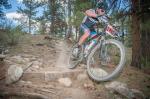
John Polli racing strong and healthy.
Enthusiastic recreational riders and competitive athletes can make mid season training errors. Namely, taking on too much physical activity, going too fast, exercising for too long or simply doing too much of one type of physical activity can strain your muscles and lead to an overuse injury. It’s easy to do during the summer months as the season beckons us to participate in outdoor activities. Yet, there are ways to enjoy ourselves and still stay strong all year long.
Pay attention to your equipment. Yes, it’s true. The right bike parts can make a difference in injury prevention. A good bike fit can make all the difference as well. Periodically, review your setup. Fit impacts comfort but also technique which is crucial to preventing overuse injuries. Your body’s position on the bike affects how you ride. It affects how much power you can efficiently deliver to the pedals. It affects how comfortable you are on the bike. Bottom line, be mindful of your bike components and bike parts.
Strength train the whole year through. Year round strength training matters. “One of the main goals with sport-specific strength training is to target your prime movers as well as the assistance muscles that support your prime movers. With proper strength training, each time you press on the pedal, your primary group of muscles (those that take on the majority of the load) will be stronger and have a stronger group of assisting muscles to help produce power. Since you are only as strong as your weakest link, the stronger system you build as a whole, the more potential you have for cycling specific gains.”
Add yoga to your fitness routine. Some of the most elite cyclists use yoga as part of a successful training program, including 2012 Tour De France winner Bradley Wiggins. According to the post, Yoga for Cyclist, cyclists need to focus on leg strength, which many poses in yoga target, but they also need to focus on flexibility and lower back strength.
Rest and recover. Plan a day of rest once a week into your training schedule. No running, biking, swimming or strength training. Your body needs a day to recover. It will not hurt your performance, but will actually help it and is critical in muscle recovery.
Ultimately, training is all about stressing your body with hard workouts, and then letting your body adapt to that load. The summer months invite us all to push the limits but with a little mindfulness, you can balance pushing the limits while staying healthy and strong.
Leave a Comment » | Peak Cycles Bicycle Shop | Tagged: bike fit, bike parts, bike parts make a difference in injury prevention, preventing overuse injuries, strength training, yoga for cyclist | Permalink
Posted by staffwriter8
July 10, 2014

USA Pro Challenge Stage 7 starting in Golden, CO
Pro cyclists are often all thought to be blessed with nature’s special gifts – a huge heart, enormous lungs and infinite leg power. Yet, in reality this is hardly the case. The truth is that most of us have the physiology to be a decent racer if we trained as much as they do. Granted, most of us don’t have the time or the resources available to pro cyclists but we can all optimize the talents bestowed upon us by training properly. Here’s how.
Start with the basics. Have good equipment. Meaning, have a bike that fits, get the right bike parts, and wear the appropriate cycling accessories. It may seem obvious but even small things add up. This is an easy one to dial in, so get it right.
Next, focus on what you can control and let go of what you can’t. Some argue work and family commitments distract from proper training but there are other elements you can control. You can control your the quality of your workouts, your bike technique, and your recovery. When training, focus your efforts using power and heart rate. Both play a key role in training and you can use both to target weaknesses and strengths. Dial in your nutrition on an off the bike so that you are properly fueled going into the workout and can bring your best effort to each training session. Also, schedule specific workouts to build fitness, improve your climbing technique and bike skills.
While it may seem counter intuitive, easy rides or time off the bike is equally as important as training time. The post, Four Ways to Recover Like a Tour Rider, suggests ways to conserve energy while riding in the peleton (aka your group ride) and use your cycling buddies as teammates to pace you and shield you from the elements.
A little R&R or active recovery is good too. Some of the most elite cyclists use yoga as part of a successful training program, including 2012 Tour De France winner Bradley Wiggins. Wiggins’ benefits from the focus it brings to his cycling, while others, such as pro mountain biker and Olympian Jeremy Horgan-Kobelski, use yoga to gain strength. From power to endurance, athletes at all levels are incorporating yoga to gain an edge over the competition, and prevent injury.
You may not make it as a Tour rider but you sure can embrace the training elements of a Tour rider lifestyle. And, if all else fails, put on your best suffer face!
Leave a Comment » | Peak Cycles Bicycle Shop | Tagged: bike fit, bike parts, climbing technique, cycling accessories, Four Ways to Recover Like a Tour Rider, nutrition, power and heart rate, suffer face, Tour rider, yoga for cyclist | Permalink
Posted by staffwriter8
June 26, 2014
 What makes for a successful first 100 mile mountain bike race? Is it riding a ton of trails? Picking the best race?
Or maybe, it’s knowing the difference between riding and training. Sure, many think if they ride a lot it will get them to the finish line. And it will. But training and preparing strategically for your 100 miler will not only get you to the finish line feeling your best, but it can actually prepare you for better performances in the future. Here’s why.
According to the post, Nine Golden Rules for Training, consistency is key. That means consistently training but also, consistently racing builds fitness too. Consistency in racing builds all kinds of fitness: mental, physical, and psychological fitness. To ensure a successful 100 mile mountain bike race, you need to train all the systems.
You can start by looking at the type of race or races you like to race. What types of terrain, geographical areas, and elevations profiles suit your strengths. What about your weaknesses? There are numerous 100 mille mountain bike races to choose from including the National Ultra Endurance Series, the 100 Mile Mountain Bike and Running Off Road Race Series and the the Leadville 100 Race Series. Racing longer distances consistently builds an endurance baseline to build upon year after year.
Consistency in race preparation makes a difference too. If your race day strategies are scattered, unorganized, and left to chance, all your training leading up to the race can only take you so far. The post, Top 10 Tips For Your Best 100 Mile Mountain Bike Race states the importance of race day preparations.
Other resources reinforce dialing in your race day nutritional needs and bike inspections to avoid mechanicals, flats, and other bike related issues due to not having your bike parts in order for racing. Imagine doing all the prep work for a major race and having to DNF due to not replacing a chain, derailleur, or tire.
Consistency in training helps you physical body prepare for the physical stresses of racing a 100 mile mountain bike race. But minimizing or eliminating other stressors like those mentioned above helps you free up your mental and psychological energies so that you can successful focus on the task at hand: racing your best 100 miler ever.
3 Comments | Peak Cycles Bicycle Shop | Tagged: 100 mile mountain bike race, bike inspections, bike parts, cycling training, Leadville 100 Race Series, National Ultra Endurance Series, NUE | Permalink
Posted by staffwriter8
June 19, 2014
 The beautiful scenery and challenging terrain of Colorado’s cycling scene beckons riders from all over the world to ride along the backdrop of blue skies and snow capped mountains.
However, one of the toughest challenges a cyclist can face is completing all of their training at their low-elevation residences, and then traveling to ride or compete in a race at high altitude. For events like the Leadville 100, The Breck Epic, and The Triple Bypass, many are left questioning what to expect when riding at elevation and what are the best ways to acclimate faster to ensure optimum performance.
For starters, it’s best to understand how the body responds to altitude. The post, Understanding the Challenges of High-Altitude Racing at the Leadville 100 and USA Pro Cycling Challenge, gives us a detailed understanding. “The basics of altitude work like this: as you go higher the air becomes less dense, which means the oxygen molecules are more spread out. As a result, when you breathe in and fill your lungs, there are fewer oxygen molecules in that volume of air.” More so, as you increase in elevation, heart rate and breathing rates at rest will be increasing elevated as your body tries to pull more air through the lungs so it can grab the oxygen it wants.
While at rest at altitude, you might experience a combination of headache, poor sleep, fatigue, and dizziness. While training, racing, or participating in an event at altitude, most likely you’ll discover an elevated heart rate and reduced power. And, your recovery rate between hard efforts will be longer and maybe not even complete. So, what can you do if you want to perform your best at altitude?
Obviously, a no brainer is to have your bike and the correct bike parts in order! If you are accustomed to riding on flat terrain, you’ll want to have the appropriate gearing for your event. Specific to altitude acclimations, there is definitely science and research behind acclimating for cycling performance but without getting too technical, following are some of most common approaches.
- Acclimate – Spending time at higher elevations enables the body to adapt and increase the number of oxygen-carrying red blood cells. This improves your ability to deliver oxygen to the brain and working muscles at all levels of activity, including high-intensity exercise. The longer you can acclimatize – the better. Keep in mind, true acclimation can take three weeks or more.
- Hydrate Drink plenty of liquids. High elevations can cause fluid loss, so it’s important to stay well hydrated. Your best course of action is to stick with water or liquids that replace electrolytes and avoid sugary or caffeinated beverages. These liquids act as diuretics and can dehydrate you.
- Tools – Use your training tools for biofeedback. It’s important to know your limits going into an event and modify your strategy if necessary. This includes dialing in your race day nutrition requirements, heart rate limits, and using your power meter for feedback. Power meters are especially useful because they help riders to gauge their efforts. To maximize your opportunity for best performance, consider running course intelligence and learn the course and the conditions due to time of day. You’ll be better equipped to know when to attack and when to recover as it relates to time of day (heat), and course profile.
Overall, different people respond differently to attitude. Experiment with what works for you. And, while you might not get the same results racing at altitude as you do at sea level, the rewards of riding in beautiful Colorado is a reward in and of itself.
2 Comments | Peak Cycles Bicycle Shop | Tagged: bike parts, heart rate, High-Altitude Racing, Leadville 100, power meter, race day nutrition, race day strategy, The Breck Epic, The Triple Bypass | Permalink
Posted by staffwriter8
June 5, 2014
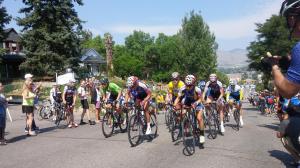 For many cyclists, a century ride (100 miles) is a goal that is equivalent to running a marathon. It seems like a crazy long distance but whether you’re pushing your limits to cover 100 miles as fast as you can or you are riding 100 miles for the first time, you can finish fresh and feeling good by planning appropriately.
Set a Date
The most important step is to set a date and sign up. You will be more motivated to train once you pay an entry fee and have a date on your calendar. Knowing when the big ride is will also help you set your training schedule appropriately. There are several citizen road rides and competitive 100 mile endurance mountain bike races to select your event. Discovering which one inspires you the most is the easy part! With so many locations, routes, and rides to choose from, you can opt for a flatter course or one that offers more challenges. Pick one, get it on your calendar and begin your preparations.
Prep Your Bike Gear
Is your bike ready for the ride? Should you use a particular bike for the century? If you’re not sure, now is the time to stop by Peak Cycles Bicycle Shop. We’ll help you identify your needs and confirm you’re on the right road bike or MTB for you. Presuming you have your bike and your bike does fit, get it and your cycling accessories ready. It is not a good idea to make major modifications to the bike the day before the ride. As you train for your century, it’s important to dial in all of your personal and bike requirements. This includes your bike parts, helmet, cycling apparel, and bicycle tools for quick fixes. If you don’t know how to change a flat, you might want to build that, along with performing bike inspections on a routine basis, into your gear preparations as well.
Train, Train, and Train some more!
Do you know the right way to train? Having a strategic approach and structured training means every workout has a purpose. Every step, pedal and stroke is being performed with the confidence it’s the right thing to do and performed the right way. The post, The Right Way to Train, shares four essential components of deliberate practice. You may also consider How to Dial in Your Race Day Nutrition Needs. If you are considered about stomach issues and performance, preparing well and listening to your body during training can significantly improve your enjoyment level during your century.
Ride and Celebrate!
Embark on your century ride and enjoy the experience! Remember to pace yourself and savor the experience. Consider breaking the course into sections or have a goal to get to the next aid station. Smaller goals are little victories aiming you towards the final big one at the finish line.
Finally – Repeat! Congratulate yourself on a well deserved accomplishment and sign up for another one!
2 Comments | Peak Cycles Bicycle Shop | Tagged: 100 mile endurance mountain bike races, bicycle tools, bike parts, Century Road Rides, cycling accessories, cycling apparel, How to Dial in Your Race Day Nutrition Needs, Stomach Issues while racing – Possible causes and solutions, The Right Way to Train | Permalink
Posted by staffwriter8
May 15, 2014
 Even the best made training plans go awry. Work demands, family obligations, illness, injury, or even weather challenges all can take a toll on training. Now with the Colorado racing season underway, the pressure is on to get into racing form.
But what do you if you are behind the curve? Stress out? Freak out? Beat yourself up? No! There’s nothing you can do about the past so you have to let it go and move forward. Here’s how to make the best of what you’ve got.
The post, Making up For Lost Training Time, suggest to focus on what you can control and let go of things beyond your control. What can you control? The intensity, duration, and consistencies of your workouts. You can also control the elements surrounding your training, as in, your bike parts, bike functioning, and being well prepared nutritionally to get the best out of your workouts.
You can also focus your efforts on training with power and heart rate. Both play a key role in training and you can use both to target weaknesses and strengths. Other options include Dialing in Your Race Day Nutrition Needs adjusting your goals to reflect your current fitness level and your aims for the season and preparing race strategies that you can build upon as the season progresses.
The post, Missing training – Adjusting the plan, reminds us, “ It’s easy to beat yourself up over missed training, but if you have been steady with training, give yourself a break. Gaining fitness doesn’t happen in one or two days and losing fitness doesn’t happen in one or two days. It takes months of steady training to gain good fitness. A few days missed or logging a fewer less hours than planned for a week is a small blip on the radar.”
You may or may not be at the front of the pack in your early Spring races, but you can definitely show up at the line in the best form possible, mentally race ready, and prepared for a healthy and strong 2014 cycling season.
1 Comment | Peak Cycles Bicycle Shop | Tagged: bike parts, Colorado racing season, Dialing in Your Race Day Nutrition Needs, Making up For Lost Training Time, Missing training – Adjusting the plan, nutrition, power and heart rate, race strategies | Permalink
Posted by staffwriter8
April 10, 2014

photo credit: League of American Bicyclist
Have you noticed? Spring is here! And you know what that means, right? The cycling season has launched! Hurray!
Now is the time to check your bike for spring riding! Do you have a flat that needs changing? Are your brakes working properly? Is your chain lubed? Do you need new bike parts?
But wait! It’s not all about the bike, right? Spring is also the time to reacquaint yourself with bike safety, the rules of the road, and proper cycling etiquette. During the winter months, it’s easy to forget many of the basics to riding safely on the road. And, drivers forget to look for cyclist when they are driving as they transition from the winter to springtime. No fear – help is near!
Join us for a FREE class offered to all cyclists on laws are for cyclists. Learn what the laws are for cyclists; how you legally and appropriately ride on public roads; what the rules are for turning, stopping, passing; your rights and obligations; become educated on bike safety, commuting and much, much more! REGISTER HERE.
When:
May 5, 2014
6:30 PM
Where:
Peak Cycles
1224 Washington Ave #145
Golden, CO 80401
Who’s it For:
All cyclist – especially new cyclist. We will provide you materials and guidance, as well as the laws and etiquette you need to take to the roads and trails. You will leave feeling more informed, more secure in your rights and obligations as a cyclist, and more confident and comfortable as you embark on your cycling journey.
Don’t miss out! There will be food, drinks, cycling education, and even bike parts to drool over! Become a street smart, savvy, safe, educated, conscientious cyclist. See you on May 5th at 6:30!
REGISTER TODAY
Leave a Comment » | Peak Cycles Bicycle Shop | Tagged: bike commuting, bike parts, bike safety, brakes, Cycle Smart, laws are for cyclists, PEAK CYCLES- Biking 101 | Permalink
Posted by staffwriter8
April 3, 2014
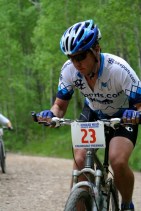
Team Bikeparts.com racer, Jason Kompf, climbing the first of many hills in the Gold Rush Run
We’ve all had those moments when you swear you’re cranking it out on the bike, giving it all you’ve got, leaving it all on the table – and then – you finish the ride and think to yourself, I’ve got more in the tank! I didn’t leave it all out there. So, how can you tell that you’re working hard enough? New technological developments may surprise you!
Traditional methods to help you gauge your efforts include heart rate training. There have been many myths surrounding heart rate training. For starters, you can only compare heart rate values with your own previous benchmarks. Meaning, comparing your heart rate with your your friend or your teammate is irrelevant. The reason for this is that we all have a different anatomy of our cardiovascular system. Also, not being aware of the factors that affect heart rate can be a pitfall in effective application in heart rate monitor use for training.
But on the flip side, power training offers a different type of comparison. Power is power. Aside from spending endless funds on bike parts, many wonder why they should even buy a power meter. But aside from taking the guess work out of your workouts, power meters also provide highly accurate details about how your fitness is changing throughout the season.
Yet there’s a new technology to help you analyze your efforts. A selfie! After years of research and working with top teams and athletes, TrainingPeaks is launching their newest feature that will revolutionize how training loads are measured and quantified: the quantified selfie. Facial Awareness Strain Technology, or F.A.S.T, uses cutting edge facial recognition technology to help you determine the stress of your training. Simply take a selfie with your phone during a workout and load it into the new app. Within seconds the technology will analyze your photo, determine your effort and give you a F.A.S.T. score.
So now, you have three ways to determine your personal suffer score! If you do not have a trainer or coach to keep you disciplined during your workout, a heart rate monitor, power meter, or a quick selfie can be a great substitute. It can tell you when your exercise is falling below your ideal intensity so you can instantly improve your performance. It can be a great bio feedback tool and also help you to monitor your fitness, prevent overtraining, and take your performance to the next level. Bring on your best selfie!
1 Comment | Peak Cycles Bicycle Shop | Tagged: bike parts, cycling suffer, cycling training, Facial Awareness Strain Technology, heart rate monitor, heart rate training, heart rate training myths, power meter training, selfie | Permalink
Posted by staffwriter8
March 20, 2014
 The Spring Racing Season in Colorado is nearly here! With upcoming events like the Louisville Criterium, Front Range Cycling Classic, Ridgeline Rampage, and The Koppenberg, road and mountain bike racers are ready to ride. But, don’t think that just showing up on the line is enough. Preparing mentally, physically, and being bike ready will ensure a successful start to the season.
Previously, we shared in our Peak Cycles blog post 5 race day strategies to prepare for the Spring races in Colorado highlighting the importance of setting goals, knowing the race route, establishing race day rituals and getting into the proper mental state for racing.
Yet, with road and mountain bike races beginning as early as next month, you need to dial YOU in to your race schedule. Are YOU race ready? The post, 5 Steps to Being Race Ready, reinforces the need for mental and physical preparation, as well as nutrition and bike parts checks, but part of racing is using your energy effectively – on and off the bike.
Balancing work, family responsibilities, training and racing is a key component to being mentally and physically ready to tackle the demands of early season races. As you transition from winter training to spring racing, your mental and physical demands will change. You need to have a transition plan in place to find balance.
- Consider making note of conflicting interests. See what is incongruent with your schedule, your work or family life and commit to sorting things out in a harmonious way.
- Communicate your needs and expectations to others. And, on the flip side, let them know what they can expect from you.
- Plan ahead. Be proactive. Set specific times for work, family and the bike.
- Give something back. If your family supports you in your training and racing, show how much you appreciate it. Combine races with a family outing and maybe promise to take a couple of months off the bike at the end of the season.
You may or may not be at the front of the pack in your early Spring races, but you can definitely show up at the line in good form, race ready, and prepared for a healthy and strong 2014 cycling season.
4 Comments | Peak Cycles Bicycle Shop | Tagged: 2014 cycling season, bike parts, Front Range Cycling Classic, Louisville Criterium, mountain bike, Peak Cycles Race Team, Ridgeline Rampage, Spring races in Colorado, The Koppenberg, work life balance | Permalink
Posted by staffwriter8
March 13, 2014
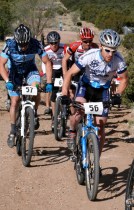
Spring Racing at Peak Cycles
Daylight savings time is here! That means longer days and more ride time. Before you know it, the Spring racing season will be off!
Are you ready?
Like many, the winter weather has many off on the sidelines but there are ways to get in shape just in time for Spring riding.
The trick is efficiency. With your goals that is. If you aren’t clear on what you are trying to accomplish, chances are, your training will fall short. The post, Using the “Power of 3” to Reach your Goals, shares 3 important questions related to positioning your Spring training and racing: What We Want to Do, What We Can Do, What We Did Do. It illustrates the point that as you go about setting and obtaining your cycling goals, attacking them from 3 different angles will greatly increase your chances for success.
Starting with what you want to do – it’s important to Make Proper Goal Setting a Priority for Your 2014 Cycling Season. What do you want to accomplish? When? How do you know you’ve reached your goals? Making SMART (specific, measurable, attainable, realistic and time-bound) goals not only boosts your chances of attaining your goals, but you also become a better cyclist in the process. Clearly define your goals for early season riding and racing so that they are realistic yet goal worthy.
Moving on to what you can do – you can begin now to monitor your efforts and begin incorporating Zone 3 Efforts. What does that mean? According to the post, Improve Cycling Endurance Using Zone 3, it means, “For cyclists entering into their late base training phases, increasing muscular endurance and strength on the bike needs to become a greater focus. The greater your muscle endurance, the less fatigue you will experience towards the end of a long race and the more intensity you can handle while training.” Use a power meter, heart rate monitor, and other valid bio feedback tools to optimize your workouts. Make your time on the bike matter.
Finally, evaluate what you did do. Did you stick with your training plan? Did you complete your strength training? Have you registered for your upcoming races? Reflect back on what you said you were going to do and objectively answer – did you do it? Note where you fell short and why. You can beat yourself up and feel guilty for missing training. Or, you can learn from your mishaps and restructure your training plan to accommodate things you have control over.
The post, Missing training – Adjusting the plan, reminds us, “ It’s easy to beat yourself up over missed training, but if you have been steady with training, give yourself a break. Gaining fitness doesn’t happen in one or two days and losing fitness doesn’t happen in one or two days. It takes months of steady training to gain good fitness. A few days missed or logging a fewer less hours than planned for a week is a small blip on the radar.”
The key here – start pedaling. Longer days means more sunshine and time to ride. Now’s the time to dial it all in – your goals, your training, your bike parts, and your races for Spring 2014!
1 Comment | Peak Cycles Bicycle Shop | Tagged: bike parts, cycling endurance, cycling goals, goal setting, heart rate monitor, spring racing, spring training | Permalink
Posted by staffwriter8
March 6, 2014
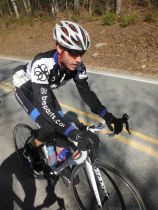
Joshua Murdock climbing Old Three Mile Highway in Linnville, North Carolina.
Many cyclists like the idea of using a training camp as a perfect way to get into shape for the cycling season. Yet, due to cost, work and family responsibilities, traveling to a designated week long training camp is not always a viable option.
If you are looking for a spring cycling camp to really challenge yourself and get in some great base miles, consider creating your own spring training camp.
There are a few factors to consider especially the overall goal of the camp. Sure, getting quality training miles is a goal, but more importantly, you may want to focus on improving ride skills and techniques as well as race tactics and strategy. With that in mind, you’ll need to decide how many cyclist to include in your camp. Evaluate each other’s fitness levels, strengths, and weaknesses and commit to bringing together a group in which all participants have something to contribute, but will also leave having learned something too.
You will want to decide on a local or remote location. Of course, weather plays a role in this but more so does your goals. Are you looking for climbing opportunities? What about long rides on quiet country roads for race scenarios? Look ahead to your early season races and consider matching the topography of your camp destination with that of your upcoming races. One way to stimulate race scenarios is to keep it competitive and fun. Use Strava to track your progress and challenge your friends.
Optimize your time off the bike too. Grabbing a few beers and some laughs builds camaraderie but sharing bio feedback, heart rate information and evaluating ride power analysis as a group can offer feedback and insights into your training and performance which may have been overlooked otherwise. Take the time to discuss nutritional requirements – find out what works and what doesn’t for others and maybe add a few suggestions to your upcoming preparations as the season progresses. And last but not least, focus on a mechanically sound bike. Rides don’t happen if your bike isn’t it good working order. Have replacement bike parts, tubes, and cycling accessories on hand to keep you in the saddle and benefiting from your training camp.
Creating your own Spring cycling training camp can be a fun adventure that gets you into shape. Teaching and learning, challenging rides and lots of laughter are all key ingredients to fuel the sprit for a successful 2014 cycling season.
2 Comments | Peak Cycles Bicycle Shop | Tagged: 2014 cycling season, bike parts, cycling accessories, cycling spring training camp, nutrition, Strava | Permalink
Posted by staffwriter8
February 27, 2014
 Enthusiastic recreational riders and competitive athletes can make early season training errors. Namely, taking on too much physical activity too quickly. Going too fast, exercising for too long or simply doing too much of one type of physical activity can strain your muscles and lead to an overuse injury.
Injury is among one of the most challenging experiences you can face as a cyclist. When you’re injured, you almost certainly can’t ride in the way to which you’ve become accustomed–and you’re often not able to ride at all. Obviously, the first rule of thumb is to avoid injury in the first place! But when an injury or a crash happens, how can you recover from an injury faster?
In the same way that you have goals when you are training and competing, you should have goals set for your rehabilitation. Instead of focusing on what you are missing from not training, focus on what you have to do to heal faster.
Focus on nutrition. You are what you eat. If injury is preventing you from sticking to your cycling training plan, consider watching what you eat! Not to avoid gaining weight, but to improve your recovery time. The post, What Can I Eat to Recover from Injury? illustrates the role of omega-3 fats, protein, glucose, and herbal supplements in injury prevention and recovery. What you eat can affect your mindset, motivation, and outlook.
Focus on strengthening your weakness. Substitute your ride time for other supportive activities. Consider heading to the gym to lift weight and do core workouts. Or, maybe focusing on stretching and yoga would be most beneficial. According to the post, Yoga for Cyclist, cyclists need to focus on leg strength, which many poses in yoga target, but they also need to focus on flexibility and lower back strength. If you are new to yoga, you may want to experiment with different types of yoga to see which works best for you. Yoga offers many varieties and styles from the slow pace of Hatha yoga, to the fast vigorous pace of Ashtanga yoga. All styles can be beneficial but the most applicable for cyclists are styles that focus on continuous movement. Styles such as Ashtanga, Power, and Kundalini are steady flowing, work through a full range of movements and build great muscle endurance.
Focus on your bike. Can the Right Bike Parts Make a Difference in Injury Prevention? In a sport based on such a highly repetitive action, like pedaling, the first line of defense against injury is a proper bike fit. Whether you’ve just sustained an injury or you are in recovery, consider the benefits of a professional bike fit. Having the right bike parts and bike fit impacts comfort but also technique which is crucial to preventing overuse injuries.
Focus on Data. Data, as in metrics, biofeedback, and a training log offer keen insights into your recovery. The post, 5 Ways to Use Data to Recover from Injury, suggests different ways to track soreness, mood, fatigue, motivation, sleep hours, and sleep quality as key metrics in your recovery program.
Ultimately, training is all about stressing your body with hard workouts, and then letting your body adapt to that load. If you push too far, injury and crashes happen. While many riders understand that recovery is key to getting back on the bike, oftentimes they fail to take their recovery as seriously as they do their training. Heal faster. Focus on overall recovery, stretching, hydrating, and resting. Soon, you’ll be back on the bike in no time with added gains towards overall sports performance.
2 Comments | Peak Cycles Bicycle Shop | Tagged: Ashtanga yoga, bike fit, bike parts, Hatha yoga, injury, injury prevention, Injury recovery, nutrition, training | Permalink
Posted by staffwriter8
February 13, 2014
 Commitment. A simple word but can be viewed two fold. Commitment as being dedicated to a cause or an activity. Or, commitment as an engagement or obligation that restricts freedom of action.
When you think of being committed to your cycling, which definition rings true for you? Like many, both seem true. While we all like to consider our training plans and racing regimens to be a true testament to our cycling passion, we also face the time restrictions and sacrifices our cycling commitments force us to make. Cycling can be a loved and hated passion.
Yet, in between loving and hating our two wheeled friends, there are varying degrees of commitment. While you tell yourself you are pushing the limits in training, or taking on big audacious goals in the new season, you might find there are still new ways to commit. You may secretly know where your love of the bike is wavering and in true Valentine’s day form – there is an opportunity to stop hiding out and playing it safe. You can commit on a deeper level to your fitness and well being.
There are a host of ways to embrace commitment. It all starts with a desire for more – to improve from a present state to a future state. For many competitive cyclist looking back to the 2013 cycling season, it begins with personal reflection. Evaluating the past season with objectivity gives insights as to what worked and didn’t work in the previous year. Committing to strengthening and improving on areas of weakness rather than just concentrating on what you do well elevates your skills and experience as a cyclist.
Looking forward to the 2014 season, commitment takes form by asking yourself what it is you would love to accomplish? Don’t just play it safe and do the same events year after year. Step it up. Commit to something bigger. Ask more of yourself. Choose different events – or do the same events – but faster! Make your goals SMART (specific, measurable, attainable, realistic and time-bound), but also inspiring.
What other ways can you commit to cycling? Could it be using your heart rate, or power meter offers options in calculating mileage and other fitness related variables. Try a new tool and see if it makes adding up the miles a little easier. Consider getting new bike parts to fuel your newfound commitment to your cycling goals.
Committing yourself to your fondest goals and desires can be comforting while also frightening. Yet, digging deeper into your dreams and desires and fully committing to their success can be personally rewarding and extremely fulfilling. Reach new heights on the bike this season – commit to it!
1 Comment | Peak Cycles Bicycle Shop | Tagged: 2014 cycling season, bike parts, cycling goals, heart rate monitor training, power meter training, Valentine's Day 2014 | Permalink
Posted by staffwriter8
January 4, 2014
For those looking to race the most technically advanced, efficient, lightweight and highly-regarded machine in the history of mountain biking, the only bike to consider is the 2014 S-Works Epic 29. Entering just it’s fourth year of production, the S-Works Epic 29 has already claimed victory at the UCI Cross Country World Championships, UCI Marathon World Championships, ABSA Cape Epic, countless UCI Cross Country World Cup rounds, the 2012 Olympic Gold Medal and dozens of national championships around the globe. Spec’d with only the most top-of-the-line bike parts available for each component and brimming with new technology, the 2014 model is the first major redesign since the bike’s introduction. Weight has been dropped, stiffness increased and suspension performance improved, making this the best Epic 29 yet. We have a size large 2014 S-Works Epic 29 in the shop to check out and we will soon have the 2014 Expert level Epic 29 available to demo in medium and large.
Blast past the break to see what makes a $10,500 bike!
Read the rest of this entry »
1 Comment | Featured Bikes | Tagged: 2014, 29, bike parts, BikeParts.com, cross country, epic, peak cycles, s-works, specialized | Permalink
Posted by Peak Cycles - BikeParts.com
January 2, 2014
 Motivation is the foundation all athletic effort and accomplishment. Without your desire and determination to improve your sports performances, all of the other mental factors, confidence, intensity, focus, and emotions, are meaningless. To become the best athlete you can be, you must be motivated to do what it takes to maximize your ability and achieve your goals.
But when the weather is poor, sunlight is at a minimum, and riding conditions are less than ideal, what do you do? Add to the fact that the holidays are now over with not much to look forward to between now and Spring and race season, many find the added holiday weight gain and winter conditions to be a downer on motivation. How do you stay motivated to ride?
The reason motivation is so important is that it is the only contributor to sports performance over which you have control. Much like training your physical body for the challenges of cycling, motivation is built too – it is not stumbled upon. Following are 5 ways to build your motivation muscle:
Have a goal. As you are considering your new goals for 2014, it’s important to evaluate the previous season with an objective, yet critical eye. Too loft of a goal may be intimidating and back fire on you. The post, Make Proper Goal Setting a Priority for Your 2014 Cycling Season offers 10 key questions for evaluation and proper goal setting for your 2014 season. Make intermediate and long term goals to keep you inspired to do your daily workouts.
Fine tune your fitness – use a heart rate monitor or power meter. Sure, heart rate monitors and power meters have been around for a while now, but how effectively are you using them? Learning what what you need to know about the nuances, ranges, and data interpretation can make a difference in just getting a workout in versus targeting a specific workout in which you hit numbers and are motivated to get after it again the next day.
Make friends with the trainer. Nobody likes riding the trainer much less riding it for consecutive days in a row, but there are ways to overcome trainer woes to eliminate boredom and support your training. Read the post here for ideas on the best equipment to use and tips for trainer workouts. Try different approaches, times of day, and lengths of workouts to keep your trainer workouts fresh.
Dial it in! Your body and your bike – that is! Have you gained weight during the holiday season? Check out Top 5 Apps for Cyclists for Off-Season Fitness Gains – for easy ways to drop the pounds. And, consider getting a bike fit. Yes, a bike fit. We’ve heard about them, talked about them, but somehow, most of us don’t get one. And why not? They say the quickest way to get faster on the bike is with a bike fit. Sure, fit impacts comfort but it also impacts technique which is crucial to preventing overuse injuries and how you ride. Meaning it directly affects how much power you can efficiently deliver to the pedals. Dialing in your body and your bike parts will keep you motivated as you discover how the new changes positively affect your time on the bike.
Train your brain. How are you training your brain? We think of discipline as a form of training or exercising the brain but use the power of visualization to motivate yourself and accomplish you 2014 season goals. The post, The Power of Mental Suffering offers key insights as to how thought creates a powerful reality.
Ultimately, motivation is not something that can be given to you. Rather, motivation must ultimately come from within. Just like the passion you have for cycling. Dig deep, find what inspires you, connect with that and pedal your way to a successful 2014 cycling season. Happy New Year friends!
4 Comments | Peak Cycles Bicycle Shop | Tagged: 2014 cycling season, bike fit, bike parts, bike trainer, cycling goals, heart rate monitor, mental training for cycling, motivation, power meter training, training | Permalink
Posted by staffwriter8
December 26, 2013

Joshua Murdock climbing Old Three Mile Highway in Linnville, North Carolina.
While the year may not be quite over, many are already planning their 2014 race and cycling season. Sure, it’s fun to have lofty new goals, new ambitions, and new venues to fuel your cycling passions through the winter months and holiday season, but not pausing to reflect on what has recently come to pass during the previous season is missing a valuable opportunity to make personal gains that only you can make. Personal reflection offers insights to truly optimize your training and racing regimen.
Before setting your sights on new goals for 2014, it’s important to evaluate the previous season with an objective, yet critical eye. The post, Athlete-Coach Season Review, poses 10 questions to review your past season’s performance:
- What was the highlight of your season (for example, best race or greatest accomplishment)?Why?
- What was your greatest disappointment? Why?
- Review your top three goals for this season. Do you feel these were achieved?
- What did you do in training this season that you feel made you faster?
- What did you do in training this season that you feel was not productive?
- If you could change your training, mental preparation, or race tactics/strategy this past season, what would you do differently?
- Was there anything missing in your training this season?
- Do you feel that you trained enough and worked hard enough in training this season?
- Do you feel that you had adequate rest during training and before races?
- Do you have any extra comments and insights on this season?
With these personal insights in mind, you are better equipped to plan and execute a rewarding and successful 2014 cycling season. Take the lessons and insights from these questions to make SMART goals for 2014. When you make your resolutions SMART (specific, measurable, attainable, realistic and time-bound), not only do you boost your chance of attaining your goals, but you also become a better cyclist in the process. Aside from the traditional resolutions to ride more, to lose weight, and to explore new rides, consider taking on some different resolutions. Explore how these suggestions can add to your training or mental preparation for the upcoming season.
Set a personal goal for the miles you want to ride in 2014. Using a cycling computer, heart rate monitor, or power meter offers options in calculating mileage and other fitness related variables. Try a new tool and see if it makes adding up the miles a little easier.
Learn to maintain your own bike. For some, bike maintenance can be a chore, but having the right set of bike components and tools can make all the difference. Consider creating a pre-ride bike check or an ongoing maintenance program to follow. Bike maintenance can be a great way of engaging in your cycling passion the whole year long.
Bike commute and do it more often. Bike commuting improves fitness, health, saves money, and also benefits the environment by keeping one less car on the road. If you aren’t a bike commuter now, maybe in 2014 you will be. And, if you already bike commute, perhaps resolve to commute by bike more frequently.
Inspire others to get out and ride. Bike inspiration comes in many forms, from DVD‘s, to books, to new bikes and bike parts, to riding with others. Share your bike passion with others in ways that are meaningful and inspiring to them. How many friends do you think you could inspire to be two wheeled friends in 2014?
Give Back. Cycling by nature brings out the best in us all. Consider volunteering your time, skills, or resources at local bike races and bike events. Event participants will be in your gratitude but you may get back more than you give! Many volunteers are inspired to participate, race, or take on bigger goals than they previously imagined due to volunteering and helping others to reach their goals.
Commit to a Positive Attitude. Nothing is more contagious than a positive attitude! Resolve in 2014 to embrace power thoughts and bike parts that motivate you to get on your bike and ride. Surround yourself with fellow cyclist aiming for similar goals. Remember, your attitude determines your altitude.
For cyclist, attaining goals is part motivation, part perspiration, and part having the right tools to help you reach your goals. Here’s to a bright and rewarding New Year ahead!
6 Comments | Peak Cycles Bicycle Shop | Tagged: 2014 cycling season, Athlete-Coach Season Review, bike commuting, bike components, bike maintenance, bike parts, computer, goal setting, heart rate monitor, road bike, SMART goals | Permalink
Posted by staffwriter8
December 5, 2013
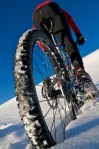
If you are living anywhere along the Front Range in Colorado, you’re living in a sea of white. Snow that is. Dreading the bicycle rainer and missing the outdoors, what are your options? Get a fat bike. You know you want it. Who doesn’t?
Fat bikes were originally invented for winter trail riding and racing in sub-arctic Alaska and simultaneously, for touring the deserts of New Mexico. But they have gained severe popularity! Their utility has expanded to include all forms of cycling; they thrive in snow, sand, desert, bogs and mud as well as riding what is considered normal mountain biking. In fact, fat bikes are the fastest growing segment in the bike industry.
The biggest plus in newer fat bike models is they’re getting lighter. Bike parts and fat bike tires are easier to get. And, there are more models to choose from. The best part? There are just more people out there riding fat bikes.
There are races too! The 2014 – Abominable Winter Adventure Run and Fatbike Race scheduled for January 25, 2014 is held at over 10,000 feet. This fun fat bike race is an opportunity to get some fun, winter FATtire competition. around an amazing groomed terrain and a Rocky Mountain backdrop. Get off the trainer and on to your new fat bike!
Discover the fat bike craze for yourself! Look at it. It is waiting for you to come get it. The Fatback 190 20″ at Peak Cycles in Golden, Colorado.
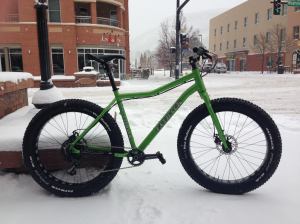
The Fatback 190 20in at Peak Cycles in Golden, Colorado
11 Comments | Featured Bikes, Peak Cycles Bicycle Shop | Tagged: 2014 - Abominable Winter Adventure Run and Fatbike Race, bike parts, Colorado, fat bike, Fatback 190 20", fatbike, Front Range, Golden, mountain biking, trainers, winter trail riding | Permalink
Posted by staffwriter8
November 21, 2013
What is the best way to get good at cyclocross and have fun at the same time? Simple – race cyclocross – a lot! You’ll learn technique, skills and race strategy as you go.
But for those athletes who want to focus their efforts and manage their time, a good plan it to structure your cyclocross training week . But what does that look like? While training time, heart rate and power zones vary, a typical training week usually includes the following.
Monday – Off Recovery is equally as important as training. The recovery period is when fitness gains are made and you reap the benefits of the hard work you’ve done. Sleep, Stretching, Hydration, and Nutrition are the SSHNs of Recovery.
Tuesday – Hard Day with Efforts. Cyclocross races are very high intensity and extremely demanding. The racer is at or above lactate threshold for the entire race. As such, your training efforts need to prepare you for your cyclocross race, but not tax you either.
Wednesday – Tempo Ride. Also, a great day midweek to check your bike and bike parts. Replace broken bike parts and components and prep your bike for the race weekend ahead.
Thursday – Recovery or Skills day. Efficiency is Paramount. A great racer is not only fit, but also smooth and efficient. The energy saved through skilled bike handling and smooth transitions on and off the bike directly translates into a faster race pace. So, if you’re struggling with the technical aspects of ‘cross (barriers, runups, transitions on and off the bike, general bike handling), take the time each week to practice these skills until they become second nature during a race.
Friday – Travel Day and/ or Openers. The goal of the day is to “prime the engine” for the weekend. Intervals are meant to sharpen, not fatigue.
Saturday/ Sunday – Game ON! Race day! Good reminders to keep in mind on race day. Leading up to your race, it’s important to stay dry. Yet, during your race, keeping your hands and feet warm are critical. Opt for cold weather gloves and booties and shoe covers to keep your hands and feet warm. If you tend to have cold feet, opting for warmer socks may help too. While hard core racers opt to keep their clothing to a minimum, others opt for a few extra comforts including knee warmers, arm warmers, and hats. Once you have finished your race, it’s important to get undressed and get warm. You may consider bringing a few trash bags to stow your cycling kit, cycling shoes, helmet, gloves, socks, and anything else that is soaked and muddy. Also, it’s also a good idea to have on hand your favorite post race nutritional product.
Overall, have fun! Cyclocross is a sport meant to be fun, otherwise, there wouldn’t be beer handoffs, money pits, crowds heckling the pros, or pros heckling the crowd. Unless you’re aiming for World Cup titles, there’s no reason to take this sport too seriously. Train, race hard, but above all, remember that it’s supposed to be fun.
3 Comments | Peak Cycles Bicycle Shop | Tagged: arm warmers, bike parts, cold weather gloves, cycling hats, cycling shoes, cyclocross, Helmet, helmet warmers, hydration, knee warmers, nutrition, recovery, shoe covers, socks, training, training week | Permalink
Posted by staffwriter8
November 7, 2013
 What makes a successful cycling season? It is having a good coach? Having a really fast bike? Having the right bike parts for each race or event? According to Mike Ricci, head coach of the 2013 National Champion CU Triathlon Team, it is consistency that pays off. This means consistency in hitting your workouts week in and week out, month in and month out, and year in and year out.
As the 2013 cycling season comes to a close, now is a good time to reflect on what worked and what didn’t work in meeting your goals and objectives this past year. How did training consistency play a part in your success or lack of success this past year? How should you be planning for 2014? And, what other questions should you be asking yourself to improve upon this past year’s performance?
While the year may not be quite over, many are already planning their 2014 race and cycling season. Sure, it’s fun to have lofty new goals, new ambitions, and new venues to fuel your cycling passions through the winter months, but not pausing to reflect on what has recently come to pass is missing a valuable opportunity to make personal gains that only you can make. Personal reflection offers insights to truly optimize your training and racing regimen.
The post, Athlete-Coach Season Review, poses 10 questions to review your past season’s performance:
- What was the highlight of your season (for example, best race or greatest accomplishment)?Why?
- What was your greatest disappointment? Why?
- Review your top three goals for this season. Do you feel these were achieved?
- What did you do in training this season that you feel made you faster?
- What did you do in training this season that you feel was not productive?
- If you could change your training, mental preparation, or race tactics/strategy this past season, what would you do differently?
- Was there anything missing in your training this season?
- Do you feel that you trained enough and worked hard enough in training this season?
- Do you feel that you had adequate rest during training and before races?
- Do you have any extra comments and insights on this season?
With these personal insights in mind, you are better equipped to plan and execute a rewarding and successful 2014 cycling season.
2 Comments | Peak Cycles Bicycle Shop | Tagged: 2013 cycling season, 2014 cycling season, Athlete-Coach Season Review, bike parts, goals, Mike Ricci, training season | Permalink
Posted by staffwriter8








 Peak Cycles - BikeParts.com Blog