Enduro Racing Comes to Colorado

April 30, 2011

http://singletrack.competitor.com/2011/04/news/euro-‘enduro’-race-set-for-colorado_15027

Enduro: How It Works

Friday, Aug. 19
STAGE 1 – Chainless Downhill
As the name states, this approximate 10 minute stage requires athletes to remove their chain and rely on their energy, flow, and technique to descend a technical course without the aid of a single pedal-stroke.

Saturday, Aug. 20
STAGE 2 – 10-15 minute Enduro Downhill
STAGE 3 – 10-15 minute Enduro Downhill
STAGE 4 – 10-15 minute Enduro Downhill

Sunday, Aug. 21
STAGE 5 – Trek All-Mountain Downhill Finale: 30-40 minute stage has a loop of climbing and descending before dropping through the entire vertical of Trestle Bike Park – 2,000 feet. The athlete’s total time will be used to determine the start times of this race. The fastest athlete in the previous four stages will go first. The remaining riders will be staggered based on their total time and will be subsequently chasing the leader to the finish.  First rider across the finish wins the overall.


Wife Friendly Pump Track

April 14, 2011


Trestle Enduro Series

April 12, 2011

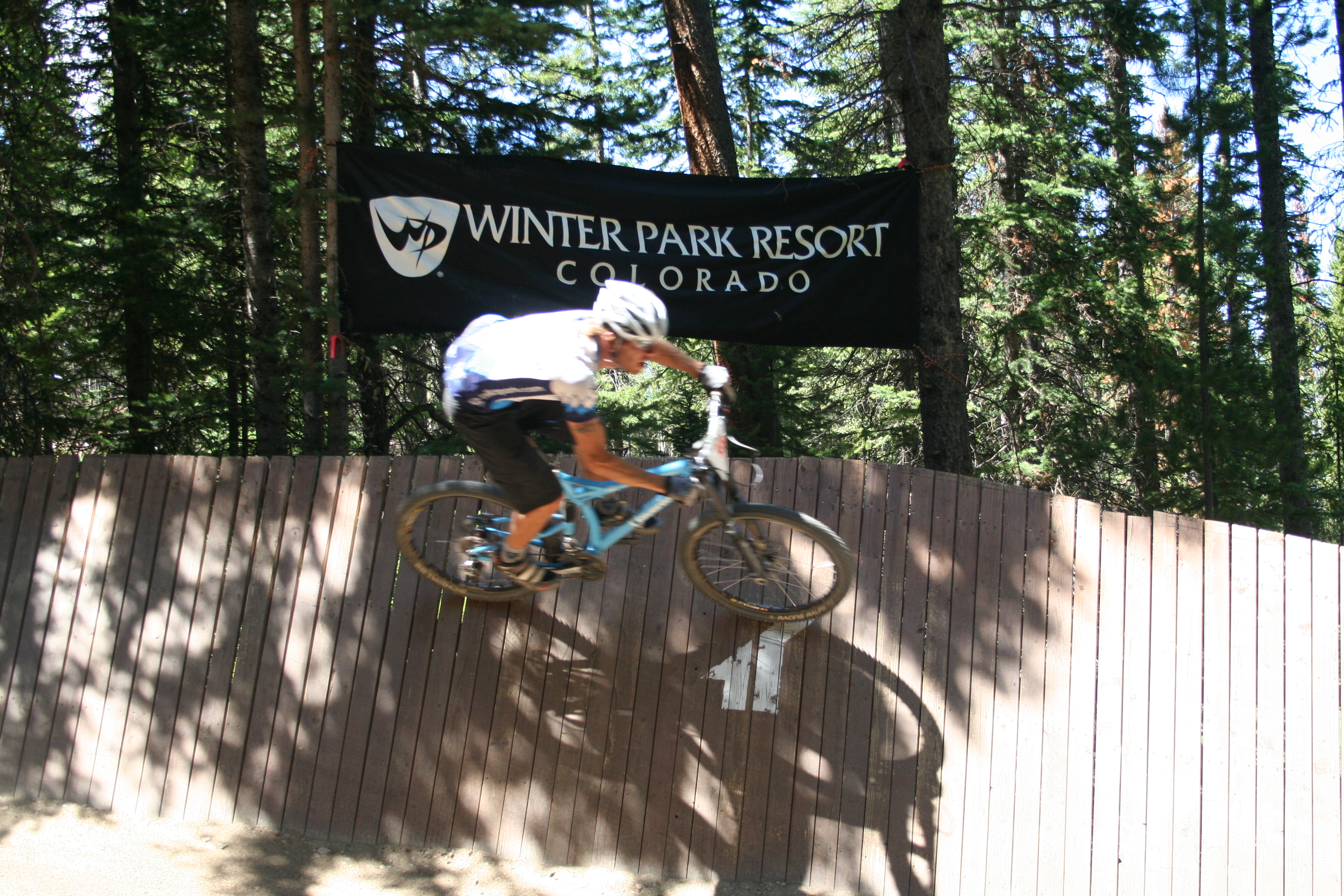
New Winter Park Trestle All-Mountain Enduro Race – Inspired by the fastest growing events in Europe, the Enduro or All-Mountain format involves multiple stages that take place on mostly downhill, technical and physically demanding terrain. This three day event will feature five stages of ranging from 10-40 minute individual time trial format. Minimum $10,000 cash purse for Pro categories. August 19-21, 2011.

http://reviews.mtbr.com/blog/trestle-bike-park-at-winter-park-resort-announces-expansion-for-2011-summer-season/


Superior Bike Park on a 20″, 24″, and 26″

April 5, 2011

Turner Boys “training” thru the expert pump track in Superior-


White Rim Trail- Mineral Bottom Road Repaired!!!

April 4, 2011

For those of you that did not know, Canyonlands was hit by a monster rainstorm last year and the road was essentially washed away!!!!


Mineral Bottom Access Road Repaired


Well now, the Mineral Bottom access on the north end has been repaired.

http://www.moabtimes.com/view/full_story/12572381/article-With-construction-complete–Mineral-Bottom-Road-is-reopened-to-vehicle-traffic?instance=home_news_right


Me and my bike

March 23, 2011


To 2-9, or not to 2-9

March 23, 2011

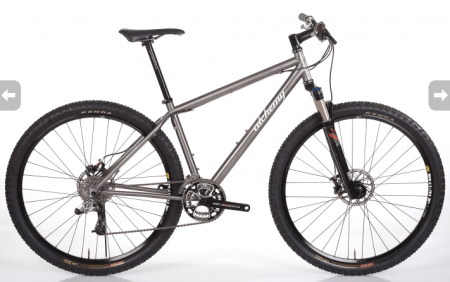
Man, on my recent mtn bike rides, I have noticed a growing number of 29rs riden by all sorts of people… Singlespeeders, shorter women, roadies who are newly getting into mtn bikes, and even long established mtn bikers.  I was wondering, was it just the low, dry, late winter trails that I have been riding that lend them selves to 29r bikes like Green Mtn in Lakewood, Marshall Mesa in S. Boulder or Coyote Ridge Trail in Loveland? Or has the 26″ wheel lost the battle and soon we will be talking about 26″ hoops like we do about 1″ stems, headsets and steer tubes?  I personally haven’t switched over completely, Santa dropped off a TB 69r a couple months ago, but I do enjoy talking to 29r riders about what they like about their 29r high horse ride…  I also came across this article called “Taming the 29r” on singletrack.com (see article below).  Are they really a great all around bike?  Steep climbs?  Technical climbs? Rocky descents?  or just for those flat and fast course, like Race The Bear, that have 100′ elevation gain per lap? What are your thoughts on the 29r?


Taming the 29er Trend (at Least a Touch)

At this point, it’s more than obvious that 29er mountain bikes are here to stay. And, it’s agreed that there are definite advantages to a larger-diameter wheel in certain situations.

This column isn’t intended to nay-say the existence or benefits of the big wheels, but simply to recognize that there’s more than one opinion out there in regards to mountain bike wheel diameters.

Alone on the Trail?

For a while, I thought I was mostly alone on the idea of sticking with 26-inch wheels, as the vast majority of Boulder, Colorado, riders I’ve chatted with seemed to have shotgun’d the 29er Kool-Aid. But, as more and more riders, racers and industry types have had the opportunity to put in solid time on the larger diameter wheels, the benefits of 26-inch wheels have come back as the hot topic in some circles.

Usually, it’s a general agreement that 29-inch wheels have specific advantages in specific environments, but have an equal or greater list of negatives that, with said riders, make the choice easy between the two.

Why 26?

29questionSo, what’s the argument to stay with the good ol’ two-six? Generally speaking, the more aggressive riders with tendencies of throwing a mountain bike around underneath them will most likely appreciate the ride of a 26-inch-wheeled mountain bike, in comparison to a 29-inch-wheeled bike of similar design. The actual size of the wheels themselves have a lot to do with this, but the geometry of the bike plays a big part in feel between the two bikes as well, especially when factoring in a rider’s size.

Comparing wheels to wheels first, and keeping in mind that we’re talking apples to apples and not NoTubes to CrossMax SX’s or 1.9 semi-slicks to 2.4 all-mountains, a 26-inch wheel is going to be lighter — period. And as far as weight is concerned, cyclists as a whole have always put the utmost importance on light wheels and tires. Even downhillers appreciate the benefits of reduced rolling weight, and constantly try to find the lightest wheel setup possible while remaining reasonably durable (ever see what Greg Minnaar runs for wheels at World Cups?)

The lighter the wheel the better it will accelerate and climb (short of building a set of wheels so light that they’re too flimsy to properly transfer power, of course). In addition, suspension has a tendency to work better with lighter wheels, braking can be arguably more responsive with less rotating weight, and overall handling ultimately becomes more responsive as well by offering a more nimble feel.

A smaller diameter wheel, again when compared directly to a similar wheel of larger diameter, will also offer a stiffer, less flexible feel, which can offer a rider a more precise and accurate feel. With suspension, this factor can be key in improving steering accuracy. In addition, the reduction in leverage with a smaller diameter wheel makes for a more durable wheel, as well.

More specific to handling differences, the fulcrum point for getting a bike with 26-inch wheels to wheelie is much more manageable with the higher bottom bracket position in relation to the lower rear axle, the shorter wheelbase and shorter chainstays. Obviously, there are variations in different designs on both sides of the wheel diameter fence, but all three usually add up to a more “grounded” effect on a 29er. On the more timid side, riders will say that 29ers feel more stable on drops at slower speeds, as there’s more wheel in front of them, and the bottom bracket-to-axle ratio adds a more stable-feeling position.

But, back to more aggressive trail tendencies, riders who like to hit drops of any height with speed have a tendency to wheelie, manual, or at least pull the front wheel up enough to set up for the next drop/rock/root, or to keep it from pole-vaulting them OTB upon landing, which is more difficult to do on big wheels (the pulling up, not the pole-vaulting).

To some riders of 29ers, there’s also a feeling of being stuck “in” the bike. This opinion is often variable in relation to a rider’s size, increasing with smaller riders, but affecting larger riders as well. The best analogy to explain this sensation, albeit exaggerated, is by comparing the ride of a big cruiser-style motorcycle to that of a sport bike. If you were to take a sport bike rider and put him on a cruiser, he may initially appreciate the smooth, cushy feel, but will most likely complain about how slow and sluggish the heavier, more relaxed cruiser handles. Kind of like riding a big Hog, the feeling of being more along for the ride than actually controlling the ride can set in on 29ers.

This sensation is more geometry based, and has a tendency to be more noticeable with smaller riders, but has been observed by all sizes.

Personal Experience

XT26A classic example of variation in wheel diameter performance, and a story I’ve told many times this year, happened this spring in Moab. A buddy of similarly matched skill and I rode LPS and Porcupine together, he on a four-inch travel bike with 29-inch wheels, and myself on a five-inch travel bike with 26-inch wheels.

Up high in the twisty singletrack that constantly interrupted momentum, he dangled off the back and was generally out of sight. But when we hit the open, straight doubletrack of Porcupine that’s riddled with embedded rocks, he and I rode bar-to-bar almost the entire time. Then on the road back to town, he and the other guys on 29ers dropped me like a rock.

The next day we rode a trail that was consistently twisty, tight, technical and varied in elevation constantly, not offering a single arena where 29ers generally shine the entire day. With each passing mile, I found myself waiting longer and more frequently for my buddy (who happens to be an amazing technical rider) to catch up.

Another example that surprised even myself was at a mountain bike time trial earlier this season where I brought my favorite five-inch travel trail bike (with 26-inch wheels), and a hardtail with 29-inch wheels. The idea was to race the 29er, and spend the rest of the weekend playing on the trail bike.

The course was a few shy of 20 minutes, started with a long, mellow and non-technical double-track climb that ramped up towards the end to fun, flowy singletrack contouring around to a fast, fluid and smooth descent back to the finish. For kicks, I took a timed hot lap on each bike before the race, all but assuming the 29-inch wheels would be the sure choice beforehand, but it turned out that, even though the 29er somehow felt faster on a good majority of the course, I’d knocked just over three minutes off its time on the 26-inch trail bike.

Don’t Forsake 26ers

Currently, the industry is still abuzz with 29ers, and if that’s what it takes to breathe some stimulation into the local shops, then fantastic. And, as mentioned before, 29ers definitely have their place in the market. But, if you’re thinking of getting a new bike, or if you’ve ridden a 29er and feel like maybe you’re missing something that your buddy is going ga-ga over, just know that while the big wheels may be good for some, they’re not the end-all, be-all for all of us.

Noted: I do have a 29er hardtail, and plan on keeping it in the fleet. It’s essentially turned into my “road bike,” and is great for long doubletrack/fire road climbs, and rides linking bike path and road with slivers of singletrack and/or sections of mellow doubletrack. There are also a handful of short-track races and smooth-coursed endurance races that’ll warrant picking the 29er for, but generally speaking, it hangs in the garage on days that are spent on what’s considered “real” trail riding.

http://singletrack.competitor.com/2010/10/29er/taming-the-29er-trend-at-least-a-touch_10872


2011 so far

March 22, 2011

http://vimeo.com/21336083


103 and still riding

March 21, 2011

From the LA Times…

It’s time to ride, but Octavio Orduño, stubborn as ever, won’t put on his glasses.

His wife, Alicia, insists: “But you can’t see without them.”

“No,” he tells her. “I don’t want to.”

Then he starts to head off, on his way.

If it were up to Orduño, he would still be cruising the streets of Long Beach on a two-wheeler.

But a few years back, Alicia insisted he add another wheel and get a tricycle. After all, he was 100 and beginning to lose his balance.

He turns 103 on Monday, so he’s probably the oldest cyclist in Long Beach. The city, which wants to make him an ambassador for biking, likes to call him “the oldest in the world.”

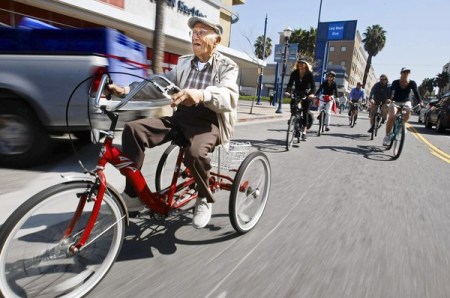
Orduño lives half a block from the beach. Nearly every day, he toddles from his third-floor condo to the garage where he keeps his red Torker tricycle. On it, he pedals around the neighborhood — to the park, the beach and the farmers market — in a ritual honed over nearly 40 years.

Not long ago, the city’s bike coordinator, a gregarious, gray-haired Texan named Charles Gandy, took notice. He befriended Orduño and shared his story online, posting two videos of him coasting down the bike lanes, propped up by his self-installed blue velvet backrest. And that’s only the start of Gandy’s plan, if the old man is game. He’d like to have him cut the ribbon at bike-friendly ceremonies and appear in television and radio ads.

“He’s our poster boy for healthy, active living around here,” Gandy said, just what people need “to shake themselves out of a rut.”

Orduño loves the attention. But his riding around town isn’t any sort of campaign.

“It keeps me going,” he said. “And it’s better than sitting in the den all day watching cars go by.”

Alicia is right. With his glasses off, it’s clear he can’t see too much at all.

No matter. He knows the six-block route to Bixby Park by feel. Aside from a few potholes that rock his hunched frame and make him yell “Ayyyy!,” the voyage is smooth.

“I can ride this bike all day long,” he says as the world whizzes by in a blur: the grind of lawn mowers, the sour smell of garbage, two growling pit bulls — one black, one beige — and a pretty girl in a flowery skirt.

The retired aerospace mechanic can’t recall how old he was when he first started riding. He just remembers it took him a long time to persuade his father to buy him a bike.

The two used to argue all the time over school, which Orduño found boring and pointless. So at 16 he ran away, hopping freight trains from Oregon to Wisconsin to Chicago. For years, he says, he labored on farms and laid railroad track, stashing his cash in an old tobacco tin.

When the Great Depression struck in 1929, the trains he rode filled up with desperate men — former doctors and lawyers who had lost it all.

His first marriage lasted 20 years and gave him four children — three boys, one girl. With Alicia, he had two more girls. Next year, the couple will celebrate their 60th anniversary.

His kids, grandkids and great-grandkids are spread across California and as far afield as New Mexico, Indiana and Missouri.

A few times a year, his son Eddie, 79, visits from his home north of Fresno. At the sight of him, Orduño lights up.

“I don’t know how many days he has left, how many months, how many years,” Eddie said of his father. “But he’s had a full life.”

Alicia wants him to keep having one. There are days she has to scold him. When he turned 100 and the state took away his driver’s license, she thought he’d be safer. But he returns from his tricycle rides scraped up from falls.

Not long ago, on his way out of the garage, his foot slipped going uphill and he flipped over. His face hit the concrete. The bike landed on his leg. He lay on the ground for half an hour before a neighbor came to his rescue.

Once, he and the tricycle came home in a police car.

“That time, I thought I was clear, so I let it roll,” he says. “I think I was going about 30 miles an hour when I went over the curb and some guys came to help me.”

A day or two later, he was back on the street, “like nothing ever happened,” Alicia said.

A few minutes into his ride to Bixby Park, the grassy knolls come into view and Orduño proudly calls out: “We’re here!

He waits in a driveway for the light to turn green so he can cross busy Ocean Boulevard. Just then, a giant Suburban comes up behind him, waiting for him to move. But Orduño, caught uphill without momentum, can’t get his ride to budge.

The driver takes in the scene and laughs.

“Puchenlo! Puchenlo!” he teases out the window. Somebody push him!

At the park, Orduño speeds past the grass and the picnic benches, where seniors lounge in the sun.

He goes straight to the back, to his favorite place: the skateboarding zone.

There, on an open stretch of concrete, young guys with shaggy hair and saggy pants zoom around, grinding the ground with ollies and flips.

Orduño hits his brakes and takes it all in. His mouth drops open in a smile.

They return the favor, singing his praises.

“Hey, sweet ride, man!”

“Yo, check him out! He’s down.”

Nick Tarrant, a 21-year-old with a stubbly goatee and a low-slung action bike, asks him his name, practically yelling so Orduño can hear him.

“Hey, it’s OK. I’m deaf too,” Tarrant tells him, pointing to his own earpieces. The two talk bikes and hearing aids, and then Orduño says goodbye.

He is ready to ride home, to Alicia and his usual dinner of beans, brown rice and vegetables.

“Sometimes,” Orduño says, as he reaches his block, “I feel stronger than the year before.”

With his birthday approaching, there’s been talk of getting him an electric wheelchair. Alicia thinks it will make it easier for her husband to get around.

But Orduño has grown attached to his three-wheeler and has no plans to give it up.

“Why would I?” he said. As for the wheelchair, “I think she can use it and follow me when I ride.”


Turner Posse Visits Superior Bike Park

March 20, 2011

The recently opened Superior Bike Park is packed full of fun and variations for all riders. The guys from LeeLikesBikes designed and build the track for the City of Superior. The park has 2 pump tracks, one beginner and one expert; also two flow trails, one beginner and one expert. Having spent a few days on at the park, I feel good saying that the expert pump track is the best in the state- HAND DOWN!!!

The park is located just south of Hwy 36 and McCaslin Blvd- on Rock Creek Parkway.

Get out and pump!!!!


Photo Friday

March 19, 2011


Photo Friday

March 11, 2011

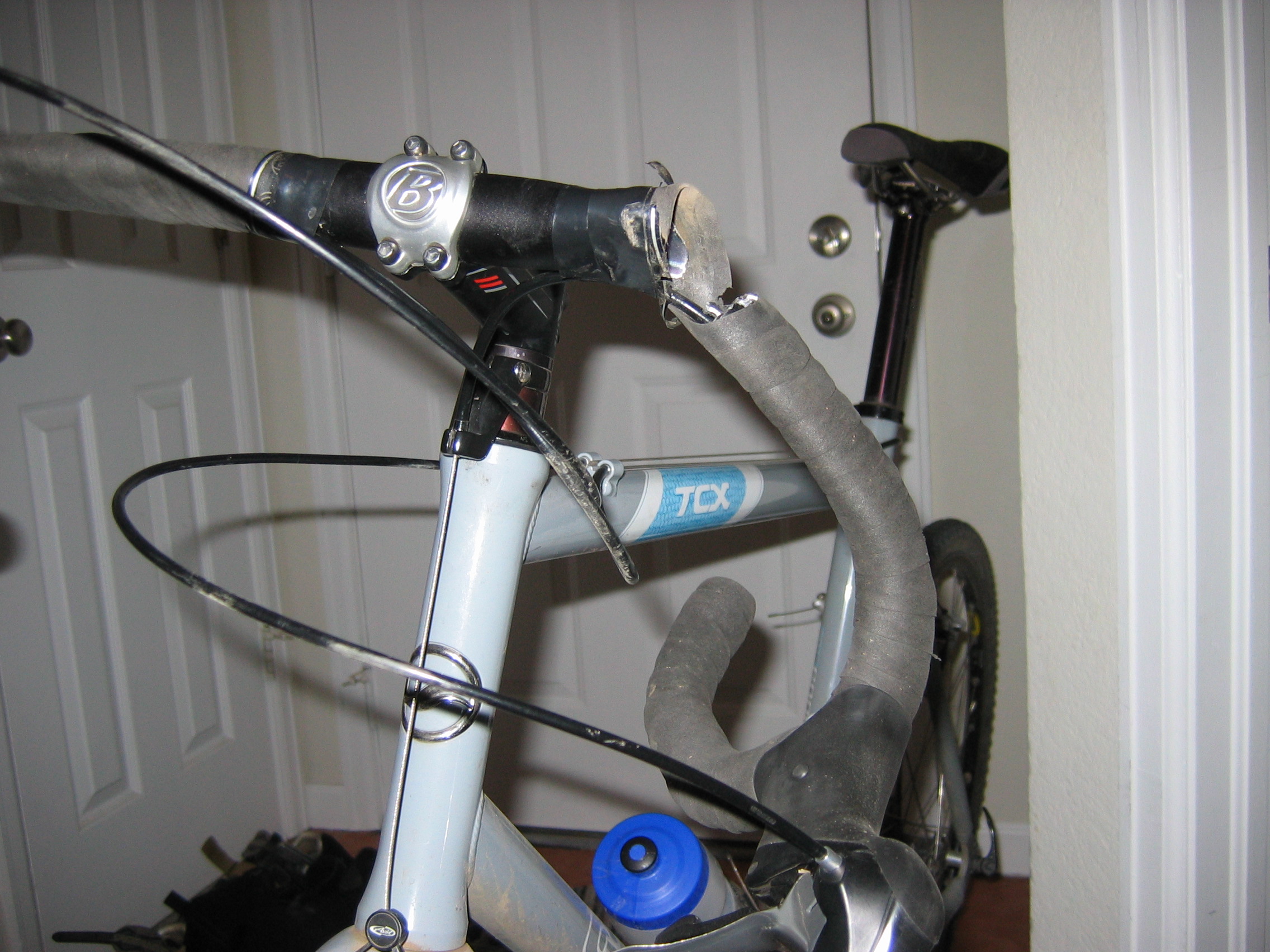
What happens when you mtn bike on a cross bike…. from ‘Big Red’ in Boulder…


A Hill in Spain

March 10, 2011

1 word.

skills.


Louiseville with PSBMX

March 9, 2011

Another one from Shelby… Louiseville with PSBMX


Gunbarrel in the Limelight

March 8, 2011

Golden rider, Shelby Smith, headed up to Boulder and made a nice video of the hard work and sick riding happening at Gunbarrel! http://www.pinkbike.com/video/184042/

In The Limelight

In The Limelight by Shelby Smith


Urban Downhill

March 6, 2011

Valpo, Chile.  Big gaps, long stair sets, random dogs!  


Photo Friday

March 4, 2011

Sunset at Golden Bike Park.


Golden Bike Park Pump Track

March 3, 2011

Its February and March and we are riding dirt!  Awesome!!!!!


Golden Bike Park- Evening at the Pump Track

March 3, 2011

Jesse flying the gap-


Golden Bike Park Work Day

March 1, 2011

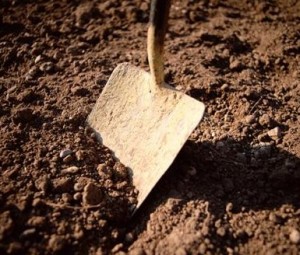
The first Saturday morning of every month is Golden Bike Park maintenance day.  This is a great chance to give back to the trails that we all love and get to know some of the other riders and people responsible for making GBP happen! Hope to see some local people out there with a shovel, brush and some work gloves!

From TAylor Shull – “Just a reminder; the crew will be out there Saturday morning for park maintenance. IF you don’t know how to maintain a trail, we’ll show you!”