Answering the unanswerable: What wheel size should I buy? (And what’s the difference, anyway?)

June 11, 2017
Wheel Size Post-4

Former Specialized Racing rider Todd Wells competes in the short track race at USA Cycling Cross-Country Mountain Bike National Championships in Bear Creek, Pennsylvania, in July 2013. Wells rode an S-Works Epic 29 full-suspension in the cross-country race and an S-Works Stumpjumper 29 hardtail in short track. 

Recent events in the 2017 UCI Downhill World Cup series have once again thrust the never-ending debate over mountain bike wheel sizes into the spotlight: Greg Minnar won the Fort William Downhill World Cup on a 29er.

It’s up to downhill purists and park rats in chairlift lines to decide what it all means for downhill racing, but one thing is certain – the limitations of big wheels might not be where the industry thinks they are. And if 29ers can race World Cup downhill, what can’t they do? Well, for one, 29ers probably won’t make an appearance at Red Bull Rampage anytime soon, nor will they feature in slopestyle or dirtjumping. But then again, people said the same about 29ers and downhill racing until just a few weeks ago, when images of prototype 29er race bikes appeared on top downhill riders’ Instagram feeds.

So, now that there are three wheels sizes – 26er, 27.5 and 29er – to choose from, what makes sense for you?

There is no “best wheel size” or “right wheel size,” but, like the genre of mountain bike you ride, there is a wheel size that’s best for you and for what you do.
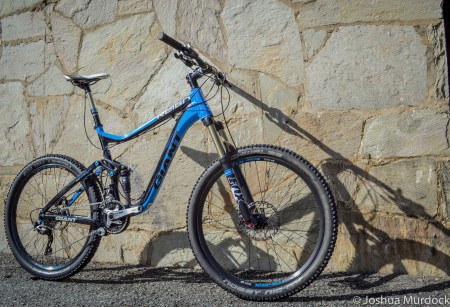
Wheel Size Post-2

This 2013 Giant Reign 1 is an example of one of the company’s last 26-inch bikes before switching almost exclusively to 27.5. The Reign remained 26-inch though 2014, but went 27.5 the following year. 

For starters, let’s review some technical details. The wheels and tires referred to as 26, 27.5 and 29 inches do not actually measure those dimensions. Although the outer diameters of the tires, when mounted and inflated, are roughly those sizes, the rims and tire beads are smaller. According to the website of the late, great cycling expert Sheldon Brown, which still serves as a definitive source for mechanics today, ISO measurement, the technical standard for categorizing rims, is the diameter of a rim from bead seat to bead seat. In other words, ISO is the rim diameter in millimeters from where the tire bead rests within the rim. Due to varying rim wall heights, the overall outer diameter of a rim is generally 5-10 millimeters greater than ISO diameter.

Wheels referred to as 26 inch are ISO 559, meaning the rim is actually 22 inches across from bead seat to bead seat and, correspondingly, the tires are 22 inches across from bead to bead. Wheels called 27.5 inch, also called 650b, are ISO 584, or 22.99 inches. Wheels called 29 inch are ISO 622, or 24.48 inches.

But, of course, that’s the diameters of the rims and tires where the tire bead interfaces with the rim – the outer diameter of tires mounted and inflated on those rims is much closer to the common names of 26, 27.5 and 29 inches.

One of the few things more difficult than picking a wheel size in 2017 is trying to find a 26er bike on the floor of a bike shop. Just like punk, 26 isn’t dead, but it’s not what it was in the ’80s and ’90s. For the purpose of this piece, we’ll stick to the two sizes found on nearly all mountain bikes today: 27.5 and 29.

In the mid-2000s, 29-inch wheels began showing up on ungainly cross-country hardtails, and the size didn’t make too much of a splash until almost 2010, when hardtail 29ers began dominating U.S. cross-country races. Full-suspension 29ers soon became the norm, and in 2011, Jaroslav Kulhavy was the first rider to win the UCI Elite Men Cross-Country World Championships on a 29er, blasting to a commanding victory on an S-Works Epic 29.

Wheel Size Post-3

Lea Davidson of Specialized Racing rides a (likely final prototype) 2014 S-Works Epic 29 at USA Cycling Cross-Country Mountain Bike National Championships in Bear Creek, Pennsylvania, in July 2013

But as 29ers quickly grew to be the dominant wheel size on 4- and 5-inch travel mountain bikes, many riders contended that big wheels and big suspension didn’t mix – at least not yet. Companies satiated the demand for slightly  larger wheels on longer-travel bikes by fully supporting what used to be an oddball wheel size: 27.5 inch.

At 22.99 inches in ISO diameter, 27.5-inch rims are just 0.99 inches larger in ISO diameter than 26-inch rims and a full 1.49 inches smaller than 29er rims. So, despite the name, 27.5-inch wheels are not halfway between 26- and 29-inch wheels; they’re closer to 26 and further from 29. They provide a slight traction and angle-of-attack advantage over 26ers while accelerating quicker and being more easily maneuvered than 29ers.

Wheel Size Post-5

The 2014 Giant Trance Advanced 1 is an example of a 5-inch-travel, 27.5-inch-wheeled trail bike, a common combination of suspension travel and wheel size. 


If you’re a rider who charges straight through rough terrain, preferring to ride over obstacles rather than around, then 29-inch wheels will better suit your riding style than their smaller counterpart. It comes down to angle of attack, or how easily a wheel can ride over an obstacle. Think of it this way, just like a bicycle rolls over a pebble better than a skateboard does – because the bicycle’s wheels are bigger – a bicycle with bigger wheels will roll over an obstacle better than a bicycle with smaller wheels.

The larger wheels also provide a longer contact patch of tread on the ground as the bike rolls forward, creating more traction. More traction is good, well, everywhere: climbing, cornering and descending.

Wheel Size Post-1

With 29-inch wheels and 4 inches of suspension travel front and rear, the S-Works Epic was the first 29er (and first full-suspension) to establish itself atop cross-country race podiums at the UCI World Cup level. Pictured here is the 2014 model.

But some riders would rather pick lines through technical sections and between obstacles, rather than over them. And some riders don’t like the marginally larger turning radius 29ers have, or that they can be a bit more to handle in the air. For riders who want supreme flickability and snappy acceleration over all else in a bike, 27.5-inch wheels provide all that while still giving a small rollover and traction advantage over 26ers.

Also, some riders’ belief is that big suspension and big wheels together are simply too much bike.

Aside from handling, another decision point between 29 and 27.5 is rider height. Just like kids bikes have progressively larger wheels for taller kids, starting with 12-inch wheels and progressing to 24 inch, adult bikes can now be tailored the same way. Many shorter adults find that 27.5-inch-wheel bikes fit them naturally, while 29ers feel too big. For many taller riders, 29ers are a godsend – finally they have a bike that fits!

Wheel Size Post-6

Sina Solouksaran races an extra-small Giant XTC carbon hardtail with 27.5-inch wheels in Golden, Colorado, in the fall of 2015. A shorter rider, Solouksaran sticks to 27.5-inch wheels. 

And these trends are common in what we see on the market today. Cross country bikes, like the  Specialized Epic hardtails and full-suspensions, come with 29-inch wheels. Enduro bikes with 6 inches of travel, such as the Specialized Enduro and Giant Reign, come with 27.5-inch wheels.

But brands get creative, too, often pushing the limits and providing options.

The five-inch travel Specialized Stumpjumper FSR is offered with both wheel sizes, as is the Enduro. Giant, arguably the brand most committed to 27.5, offers models with options of 27.5 or 29, such as the XTC hardtail and Anthem cross-county full-suspension.

There’s no right answer to the wheel size debate. Some riders have different wheel-size bikes for different applications, such as a 29er for cross-country and a 27.5 for trail. The only way to discover which wheel size is right for you, given the riding you intend to do, is to head to your local shop, tell the guys and girls there how you ride and what kind of bike you’re seeking, and take a few bikes out for a spin.

Peak Cycles bike shop has demo bikes with 29- and 27.5-inch wheels, both trail and cross-country. We also have dozens more on the sales floor.

Not even sure what kind of bike you want – full-suspension or hardtail, cross-county, trail or enduro? All of that is broken down in this post: What mountain bike should you buy?


What mountain bike should you buy?

March 5, 2017
Moab Oct. 2016-5.jpg


Peak Cycles Race Team rider Josh Vogt rides on slickrock near Pothole Arch at the end of the Amasa Back trail in Moab, Utah, on Oct. 15, 2016. Vogt alternates between a 4-inch-travel S-Works Epic cross-country bike and a 5-inch-travel S-Works Stumpjumper trail bike, pictured here. 

It’s an age-old question pondered at trailheads, deliberated on long rides and debated over beers: “What bike should I get?”

While the cyclist’s answer is always, “all of them,” the bike you truly should purchase is whichever is the right one for you. Whether you’re a beginner rider looking to keep up with your new riding buddies or a longtime shredder aiming to dominate the next race or group ride, the variety of mountain bikes on the market can make any new purchase a daunting task. Should you buy a full-suspension or a hardtail? A 4-inch travel bike or a 5-inch travel bike? What about dropper posts? Wheel size? Tire width? Frame material?

Sometimes it feels overwhelming, and that’s not how mountain biking should feel. Like the different types of riding they’re designed for, mountain bikes themselves can be sorted into categories. Simply assess your riding style and consider the bikes that match it. To make an even better selection, also consider what you value most when you ride.

Let’s walk through that.

Mountain biking can be generally represented on a spectrum of the most technically aggressive riding to the least technically aggressive riding. At the most-technical end is downhill riding – jumps, drops and ungodly rocks in bike parks or on the gnarliest of trails. Full-face helmets and pads are a must, and pedaling uphill is not in the game plan. At the opposite end of the spectrum is cross-country riding, where the trails point skyward as much as downward and the goal is overall speed and efficiency. In between those two extremes are trail riding and enduro. Trail riding is quintessential mountain biking – heading out for a ride and going where the trails lead, whether that’s up, down or flat, with a focus on the overall ride. Enduro is a new name for an old type of riding, formerly called “all-mountain,” wherein riders climb only out of necessity to reach the next rowdy descent.

And with different types of mountain biking come different types of mountain bikes.

Peak Ride 4-29-2015-8.jpg

Peak Cycles Race Team rider Adam Looney leads a junior rider up the Chimney Gulch trail in Golden, Colorado, in April 2015. In 2015 Looney was riding and racing a 4-inch-travel Specialized Epic cross-country bike.

Cross-country riding is dominated by 4-inch-travel race machines designed to be as light and efficient as possible while allowing for just enough descending capability to get down to the bottom of the next climb. If you’re looking to test your aerobic capabilities or if you’re a cross-country racer, this is your ticket. Your area’s terrain and your budget will determine if you ride a hardtail, such as a Specialized Stumpjumper or Giant XTC, or a full-suspension rig, such as a Specialized Epic or Giant Anthem. A hardtail is an absolute rocket on smooth, flowy trails with few sustained technical sections. They’re also lighter and can be more bang for your buck. A full-suspension with an otherwise identical component spec as a hardtail will typically cost $800-$1,000 more due to rear suspension.

A full-suspension is better suited for most mountain bike trails, which typically feature natural technical obstacles and rough surfaces. A full-suspension also keeps your body fresher throughout the ride by reducing impacts. Being able to tackle technical terrain with significantly less rider input almost always makes up for the marginal (and in 2017 very minuscule) loss in pedaling efficiency due to rear suspension. But, as stated, full-suspension bikes are more expensive when comparing bikes of otherwise identical specs.

While ultra-light, 4-inch-travel rigs have long defined cross-country riding, 5-inch-travel bikes with slacker geometry, including the Specialized Camber and Giant Anthem SX , are rapidly becoming light and efficient enough to challenge 4-inch bikes uphill and noticeably out-descend them downhill. Modern carbon fiber frames, revolutionary geometry and lightweight components put top-end 5-inch bikes, previously ignored by racers, in the same weight class as many cross-country steeds. But if you’re looking to hop on a trail bike that weighs in like a cross-country bike, expect to pay a premium.

Peak Ride 4-29-2015-18.jpg

Peak Cycles Race Team rider Josh Vogt climbs the Chimney Gulch trail in Golden, Colorado, in April 2015. Vogt alternates between a 4-inch-travel S-Works Epic cross-country bike and a 5-inch-travel S-Works Stumpjumper trail bike, pictured here.

Trail riding, until a few years ago defined as simply riding a cross-country bike while not racing, now has bikes of its own. Ten years ago, a salesman would direct a first-time buyer toward 4-inch-travel bikes – then the standard rigs of the sport – but modern 5-inch-travel bikes are efficient and light enough that there’s no reason for an all-around rider to look to a shorter-travel bike unless they’re racing. Full-suspension, 5-inch bikes like the Specialized Stumpjumper and Giant Trance pedal nearly as efficiently as their racier brethren and hardly come with a weight penalty. But 1 inch of travel and slightly slacker geometry go a long way in descending capabilities.

If you hop on your bike not to race but to enjoy the trail – all kinds of trails – and challenge yourself, and if you enjoy climbing as much as descending, a 5-inch-travel bike is the way to go.

Moab Oct. 2016-2.jpg

Peak Cycles Race Team rider Jake Lueckel descends a rock ledge on the Amasa Back trail while riding a 6-inch-travel enduro bike in Moab, Utah, on Oct. 15, 2016.

“That’s so enduro,” said the rider wearing baggies, a half-shell helmet, goggles and an everlasting grin. “I can’t wait to shred that section once it’s tackier in the fall, bro. Grab some IPAs at the brewery later?”

Formerly known as “all-mountain riding” and until recently devoid of organized competition, enduro riding revolutionized mountain bike components, frames, style and stereotypes as it became mainstream in the years since 2010. With more of a focus on shredding descents and less of a focus on setting personal records uphill, 6-inch-travel enduro bikes – always full-suspension frames – came of age once professional enduro racing took off and manufacturers began pouring R&D dollars into the sport. Now you can head out on an enduro bike, including the Specialized Enduro and Giant Reign, that pedals uphill almost like a cross-country bike and descends almost as well as a downhill bike. But if smashing climbs is your thing, this is not the bike for you. Even the most expensive enduro rigs can tip the scales closer to 30 lbs. than 25, and the long, low, slack geometry with a short stem and upright cockpit isn’t much for hammering up the trail. But rest assured you will (eventually) get to the top and when you do, you’d better be ready to rally the descent.

angel-fire-2015-men-a-dh-25

Peak Cycles Race Team rider Bryce Hermanussen, pictured here riding for Fort Lewis College, sends a road gap on his Specialized Demo downhill bike at the Angel Fire, New Mexico, collegiate downhill race in October 2015.

If you have to ask what downhill riding is, you likely are not in the market for a downhill bike. With 8-10 inches of travel, burly construction and obscenely long, slack geometry, downhill bikes are purpose-built for one thing: tackling the gnarliest, steepest, most death-defying descents as capably and, rider depending, as fast as possible. Dual-crown forks that would look at home on a dirt bike and brake rotors the diameter of those on compact cars adorn these engineering marvels capable of sending massive jumps and charging through terrain that the riders themselves struggle to navigate on foot. Downhill bikes are true to their name: They’re made to go downhill and are all but impossible to ride uphill. They’re even a challenge on level terrain.

If you’re lapping the lift-served bike park and shuttling chunky trails with your buddies – and if you have no desire or need to ever ride uphill – a downhill bike like the Specialized Demo or Giant Glory will serve you best and leave the rest up to you.

Have an idea of what type of mountain bike is right for you but not which model? Stay tuned for more posts breaking down wheel sizes, tire widths and frame materials.

No matter what bike you decide is right for you, be sure to stop by Peak Cycles in Golden, Colorado, and talk it over with the experts there. Everyone at Peak Cycles rides year-round and many of them race. The shop staff includes road riders, cross-country riders, cyclocross riders, gravel riders, enduro riders and downhill riders. The shop has a wide variety of mountain bikes from leading brands on the floor, ready to test ride.